
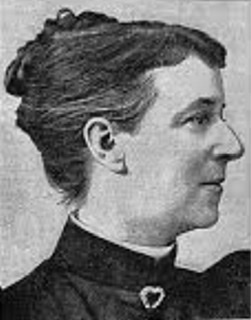
In late Victorian times music halls were a countrywide institution and had moved on from grimy rooms at the back of public houses to full blown palaces of entertainment with elaborate architecture and lavish interiors. However, they still had their critics with the foremost among them being Mrs Ormiston Chant of the Purity Party whose view was that the halls catered for people who had a small proportion of brains. She began a campaign to remove the much appreciated Ladies of the Promenade from the Empire, Leicester Square, in London. This did not please a young Winston Churchill who wrote in his autobiography we were scandalised by Mrs Chant’s charges and insinuations. Churchill was filled with scorn when a canvas screen was put up to hide the exquisitely dressed prostitutes and was part of a crowd who later tore it down. The council closed the bars and the canvas screen was replaced by railings but the decision was reversed at the next licensing session and the discreet ladies returned. Marie Lloyd fell foul of the prudes on the prowl at the Empire when Mrs Ormiston Chant made a public protest by shouting out during one of her songs. Even the Empire’s footmen in blue and gold livery could not convince the purity campaigner that this was a respectable house.

Perhaps unsurprisingly, Marie Lloyd received a less than flattering description from Virginia Woolf after a visit to the Bedford Music Hall in Camden Town. We went to the Bedford Music Hall last night and saw Miss Marie Lloyd, a mass of corruption – long front teeth – a crapulous way of saying desire and yet a born artist – – A roar of laughter went up when she talked of her marriage. She is beaten nightly by her husband. This was at the music hall built in 1899 on the site of the original Bedford Music Hall (1861). The original being later known as the Old Bedford and providing the setting for a series of Sickert’s music hall paintings.
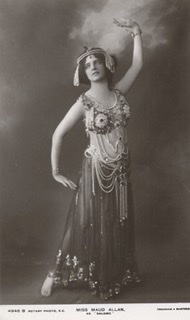
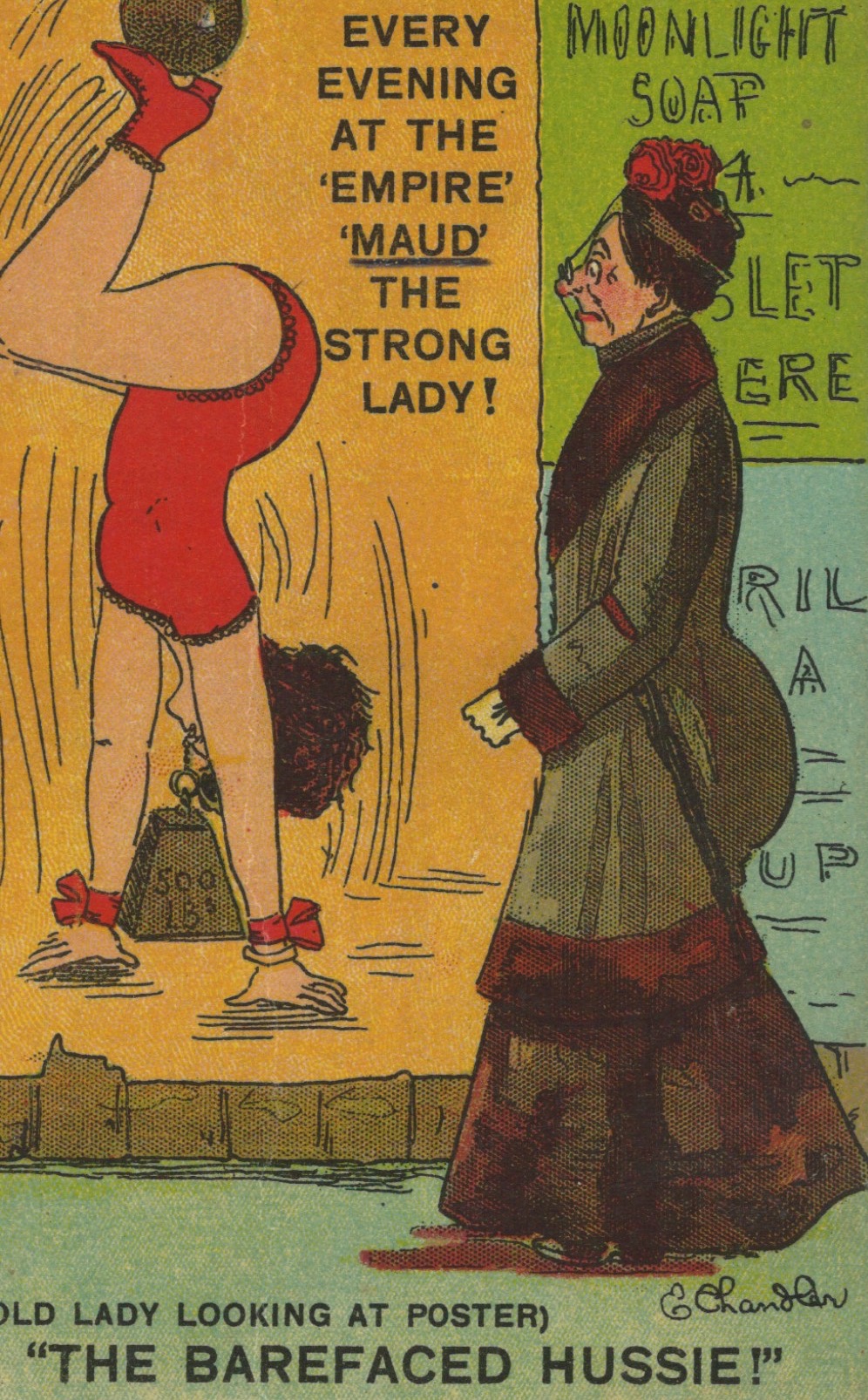
The dancer, Maud Allan, caused a stir in 1908 with her classical dancing and costume particularly when performing Salome which was banned from some music halls and theatres. The Palace, Manchester, received a visit from the Chief Constable who watched her performance and advised the Manchester Watch Committee to prohibit her appearance. He expressed a wish to go on the stage to get a closer look at her costume but was denied this by the managing director, Mr Alfred Butt. The Chief Constable was very anxious to accept Mr Butt’s suggestion that he look at the costume when Miss Allan had changed but was stopped by the official who was with him. Maud Allan agreed in some cases to dispense with the carrying of St John the Baptist’s head on a platter during her performance. I was amused to see that on one occasion she was followed on the bill by Juliette’s Sea-Lions.

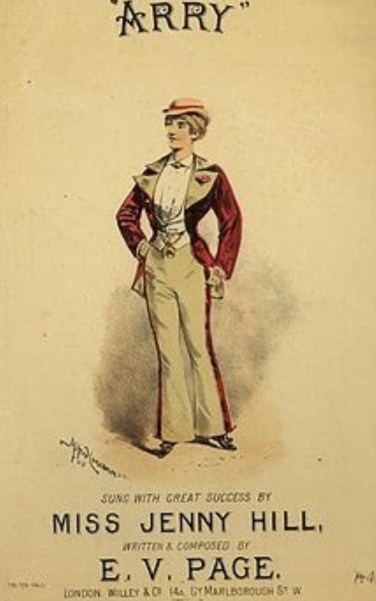
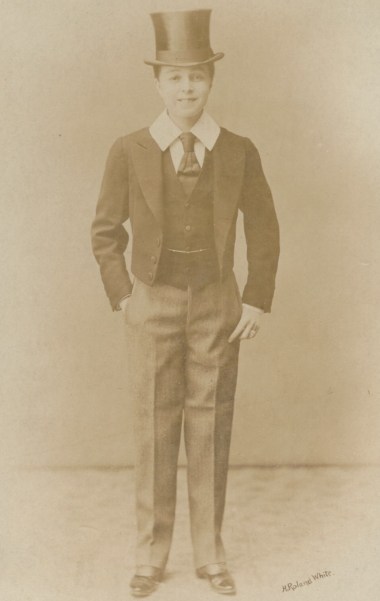
America was not without it’s perils for the music hall star as male impersonator, Bessie Bonehill, found out during a season at Tony Pastor’s theatre in New York. She kept an anonymous note she received which quoted a passage from the scriptures, The woman shall not wear that which pertaineth unto a man, for all that do so are an abomination. Bessie Bonehill had short hair, unusual for the time, and did not wear wigs unlike many male impersonators. The Daughters of America tried to have her expelled from the country but she was enormously popular.
Thanks to British Newspaper Archive, Marie Lloyd and Music Hall by Daniel Farson, Marie Lloyd Queen of the Music Halls by Richard Anthony Baker, England’s Gem – the story of Bessie Bonehill by Richard Bonehill




 Dolly Mitchell was a young Scottish roller-skater who teamed up with her American teacher, Harley Davidson, to give displays in rinks and music halls. Advertised as the greatest skaters in the world and giving a wonderful exhibition of trick, fancy, acrobatic, graceful and artistic skating. They displayed over £1,000 worth of gold and diamond medals won in competition
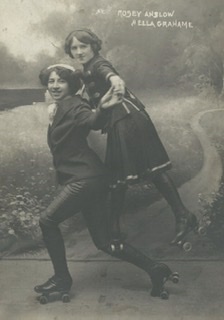 and had this publicity photo taken by Léo Forbert’s studio in Warsaw. Ella writes on the back of the card ‘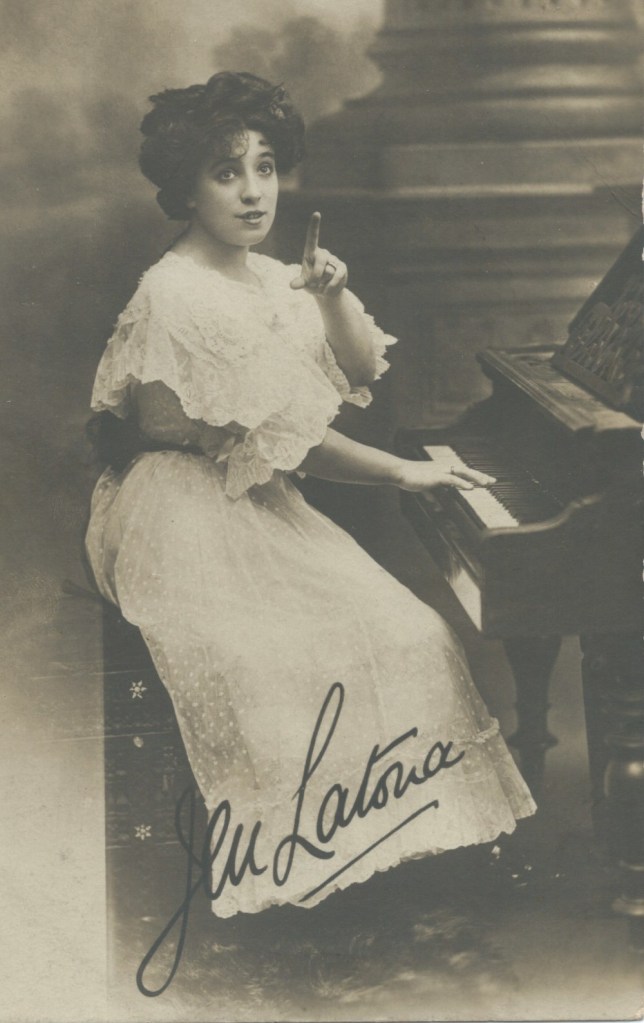






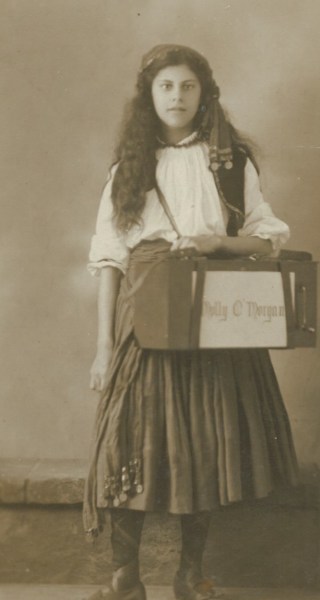 with a barrel organ. The card on the barrel organ reads ‘Molly O’Morgan’. The young woman is staring out from the photograph as if she has a story to tell. There is a story of Molly O’Morgan, the daughter of an Irish mother and an Italian organ-grinder father, who had dark brown hair and laughing eyes. It is said her mother died when Molly was young and she and her father left Ireland with a barrel organ and monkey to take their chances in Europe. Molly would dance while her father played the barrel organ and the crowds were charmed into parting with their coins. They travelled from city to city and eventually arrived in Monte Carlo where Molly’s fortunes changed. She was noticed by Duke Medici-Sinelli, an elderly widower, who naturally enough was also rich and charming. The Duke arranged for Molly to appear at a theatre and in the way of fairy tales she immediately became a star. Molly and the Duke married and unkind rumours suggested she was a gold-digger although the couple seemed devoted to each other. When the Duke died Molly did not marry again but came to Monte Carlo every year and stayed in the same suite in which she and the Duke had spent their honeymoon. She was said to live in Hungary with a distant branch of the Duke’s family.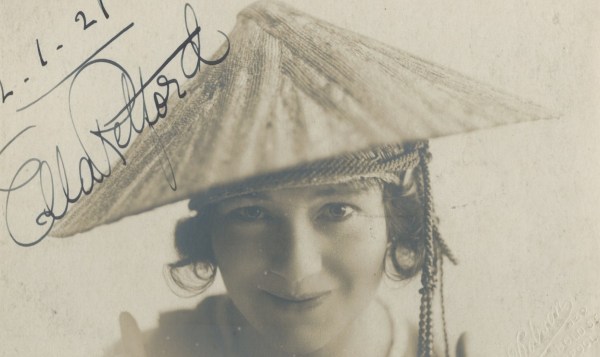

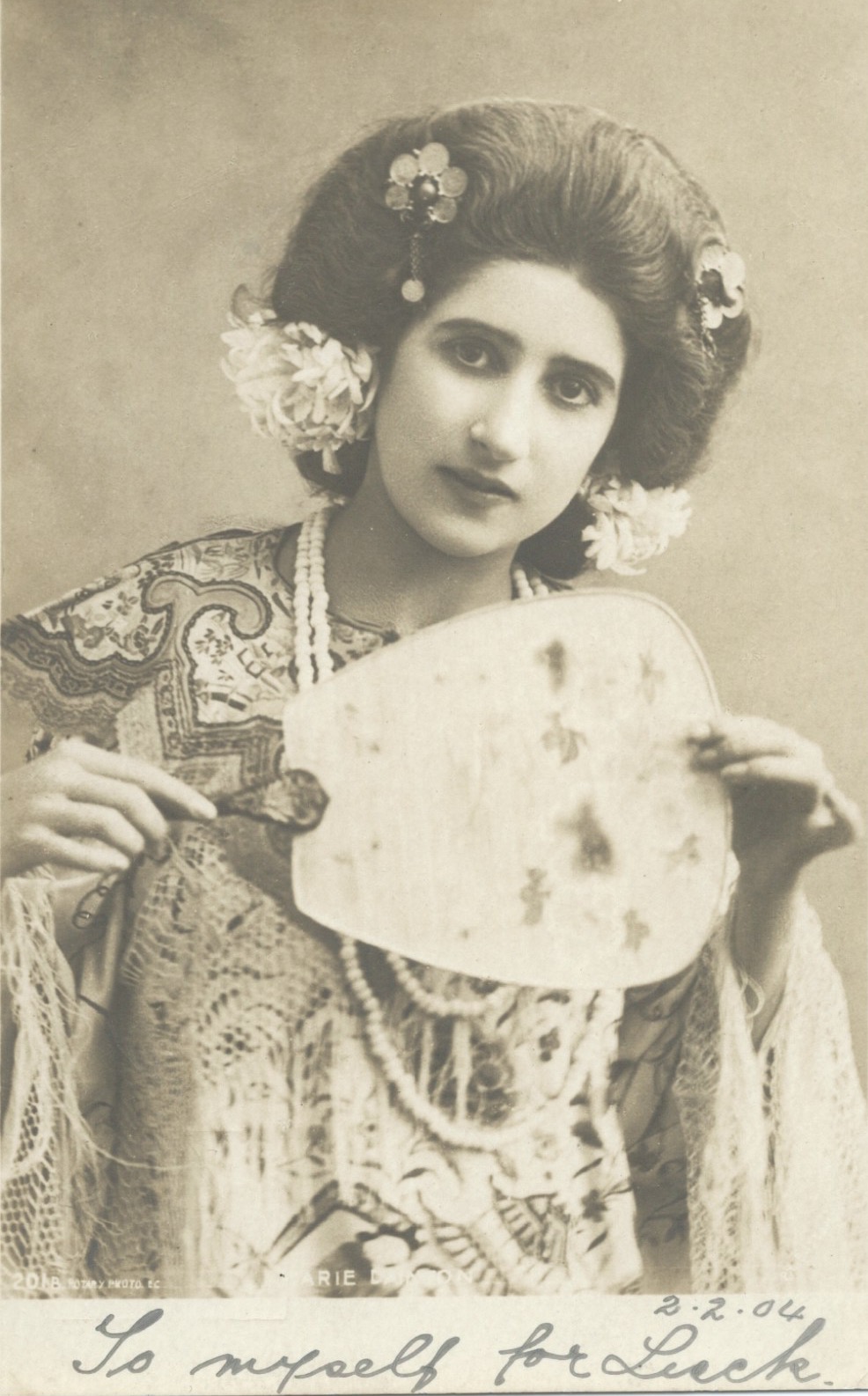
 ‘I was extraordinarily pretty’ states Caroline Otero in her autobiography My Story and this much is true. Music hall singer and dancer, courtesan and gambler, La Belle Otero lived a life of extremes and exaggerations that would raise eyebrows today. She claimed her mother was a beautiful Andalusian gypsy, Carmen, who danced, sang and told fortunes. Such was her beauty that a group of passers-by including a young Greek army officer, gazed at her in admiration as she was engaged in the unromantic task of hanging out the washing. The autobiography makes much of the courtship and devotion of the young man and tells of his death in a duel with Carmen’s lover. It is more likely La Belle Otero was born into a poor family in Galicia in November 1868 and given the name Augustina although she adopted the name Caroline at a young age. As a child she was sent away to work as a servant and is said to have been raped at the age of ten. It’s no wonder she gave herself a more romantic beginning.
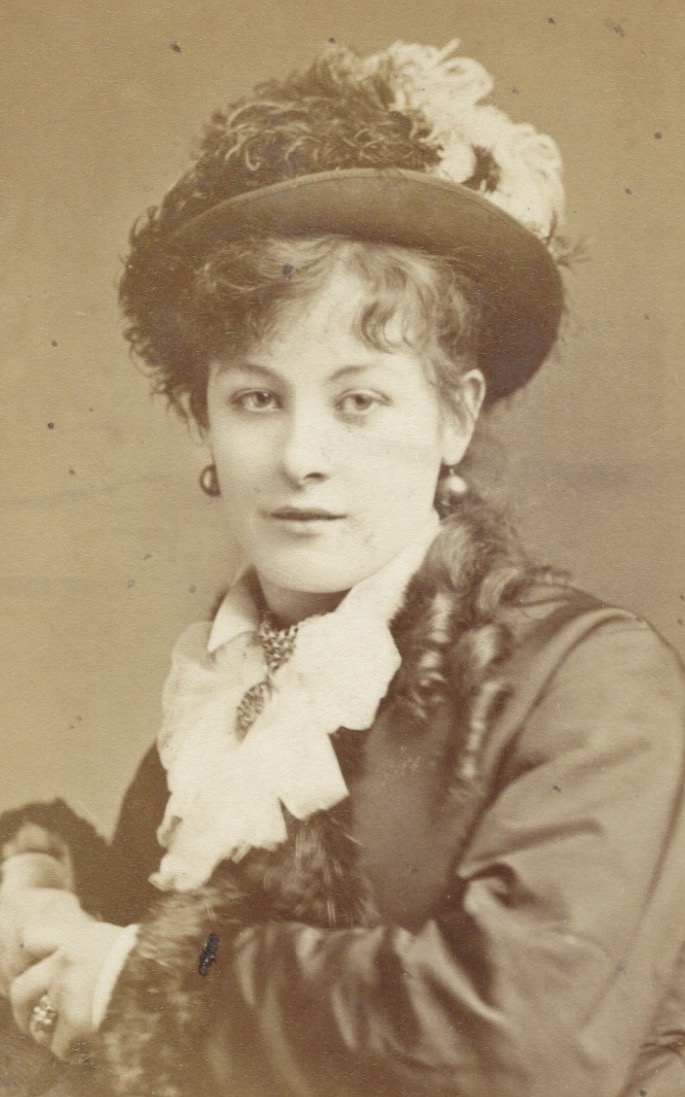
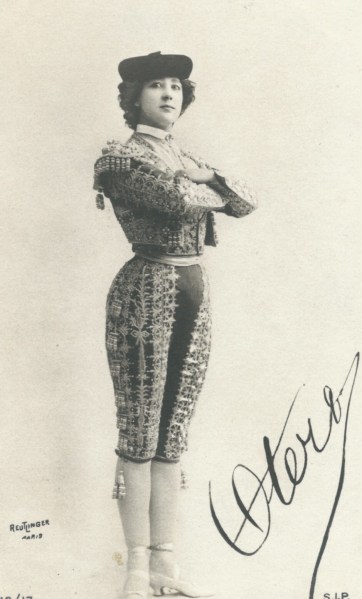 who found her work as a dancer in a Café. She moved up the scale from theatre to theatre, starring at the Folies Bergère , collecting and discarding admirers and lovers. It is said men fought duels over her and left themselves penniless after showering the object of their affection with flowers and jewels. A writer in The Sketch in 1898 reports that Mdlle Otero came on to the Alhambra stage in a salmon-pink dress covered in diamonds and turquoises with her fingers heavy with rings, the dress setting off her pale complexion and black hair to great advantage. The diamonds, worth millions of francs, were tokens of the esteem in which she was held by her admirers. The writer goes on to say that ‘most performers humbly seek the suffrages of their audience; La Belle Otero, whose equipment is in many respects inferior, from the artistic point of view, to that of her competitors, demands them as a right.’
 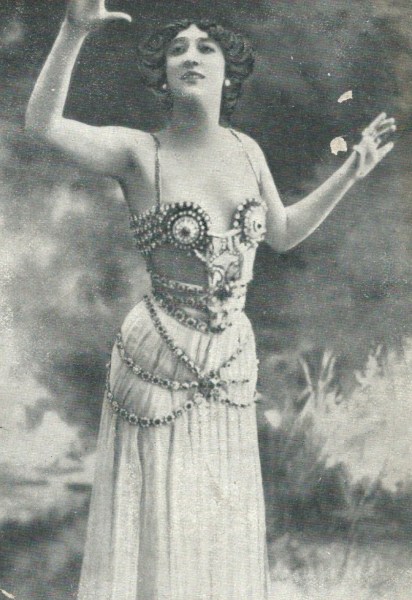 Otero was adept at self publicity and in 1902 the Paris correspondent of the Express writes that an engineer in Brussels was constructing an airship for her ‘by means of which she hopes to make a triumphal entry next August into Biarritz.’ She was worried it could be dangerous and so the balloon was to be dragged along by a car attached by a thin wire. If there was an accident she could ‘descend to the car by means of a rope ladder, which she will have tied in to the airship. The airship will float gracefully above the automobile at a height of 100ft.’ Mistress to ambassadors, princes, including the future Edward VII, and nobility throughout Europe, La Belle Otero scandalised and fascinated society in equal measure. Her weakness was gambling and she lost vast sums of money at the tables, sometimes her own and often her admirers’ fortunes. The Tatler tells us that in 1909 police raided a gambling club in Paris and found fifty women and ten men. On further investigation another woman, Caroline Otero, was found in a cupboard.


 Into the Limelight