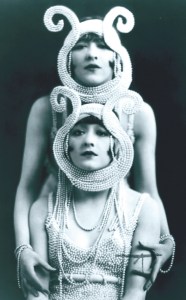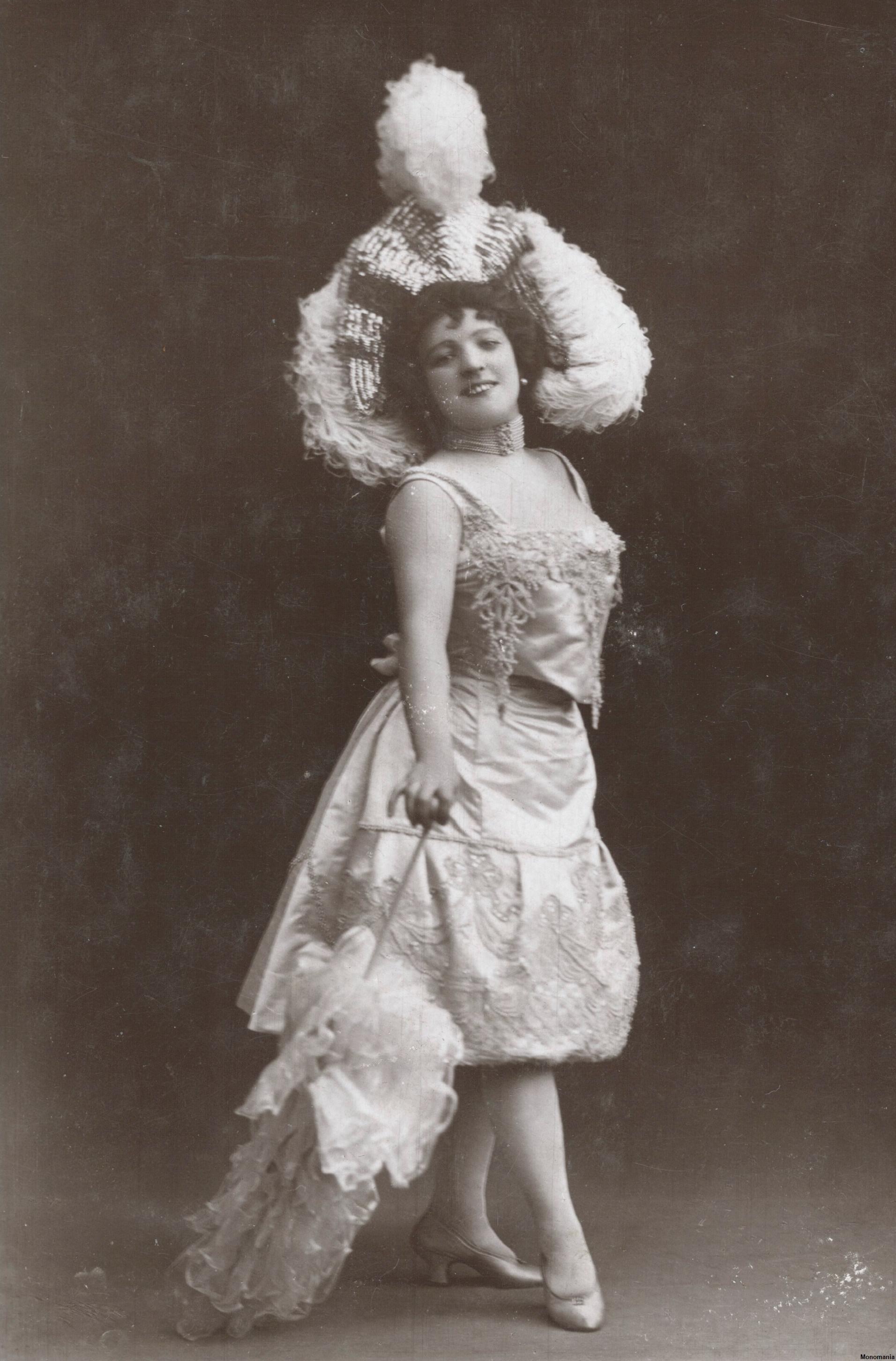
Gaby Deslys

image

Gaby Deslys

The television series, Mr Selfridge, returns to our screens and Harry Gordon Selfridge steps into our blog with his amorous links to women in music hall and variety. He was fifty-three when he opened his department store on Oxford Street, London, in 1909 and put the customer at the heart of the experience. If the customer was his chosen one she could glide through the store choosing clothes and jewels to her heart’s content, knowing that the bill would be picked up by her besotted lover. He came to London from America with his wife and four children but formed close relationships with stars such as Anna Pavlova, the ballerina, and Gaby Deslys.

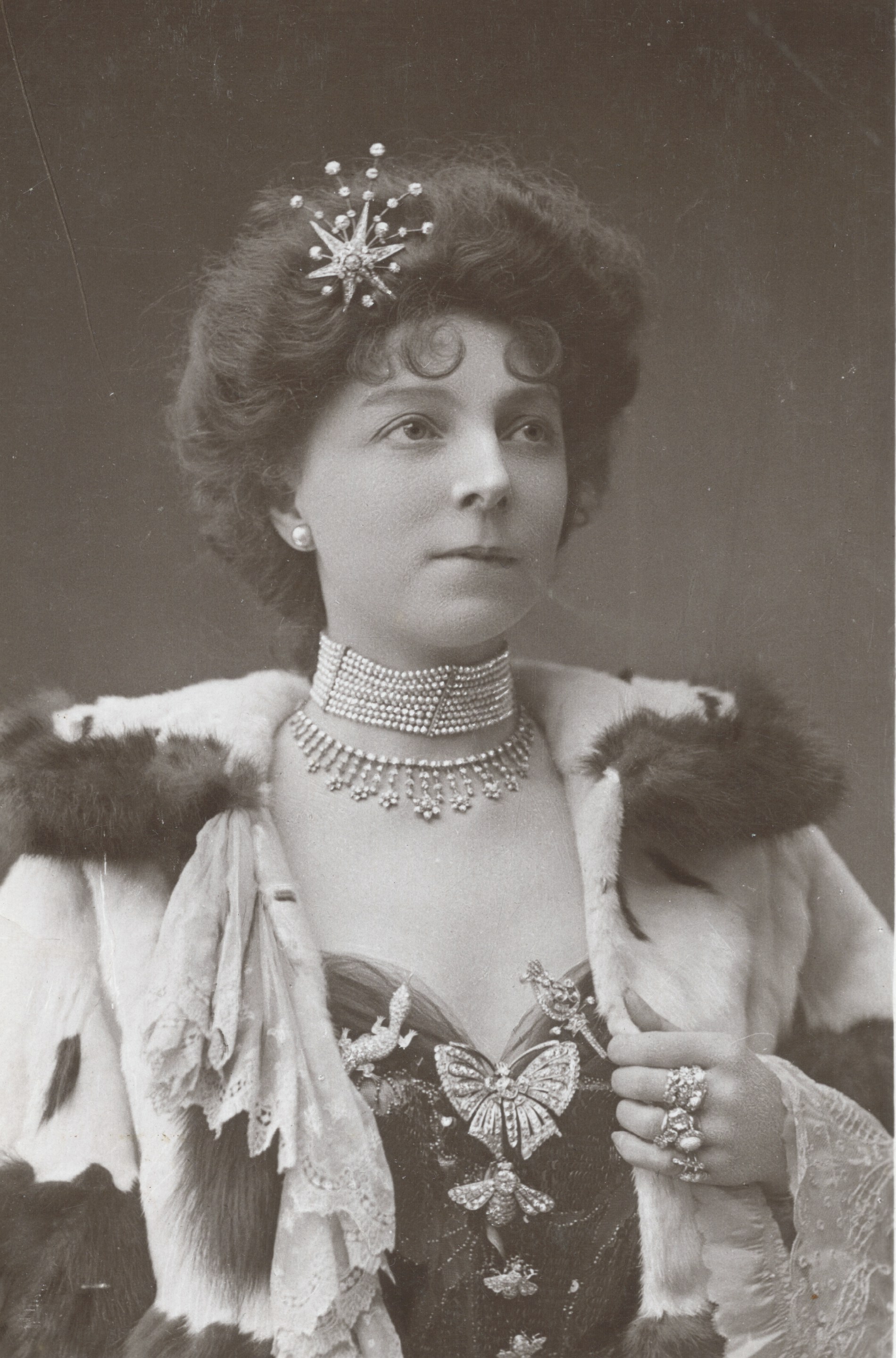
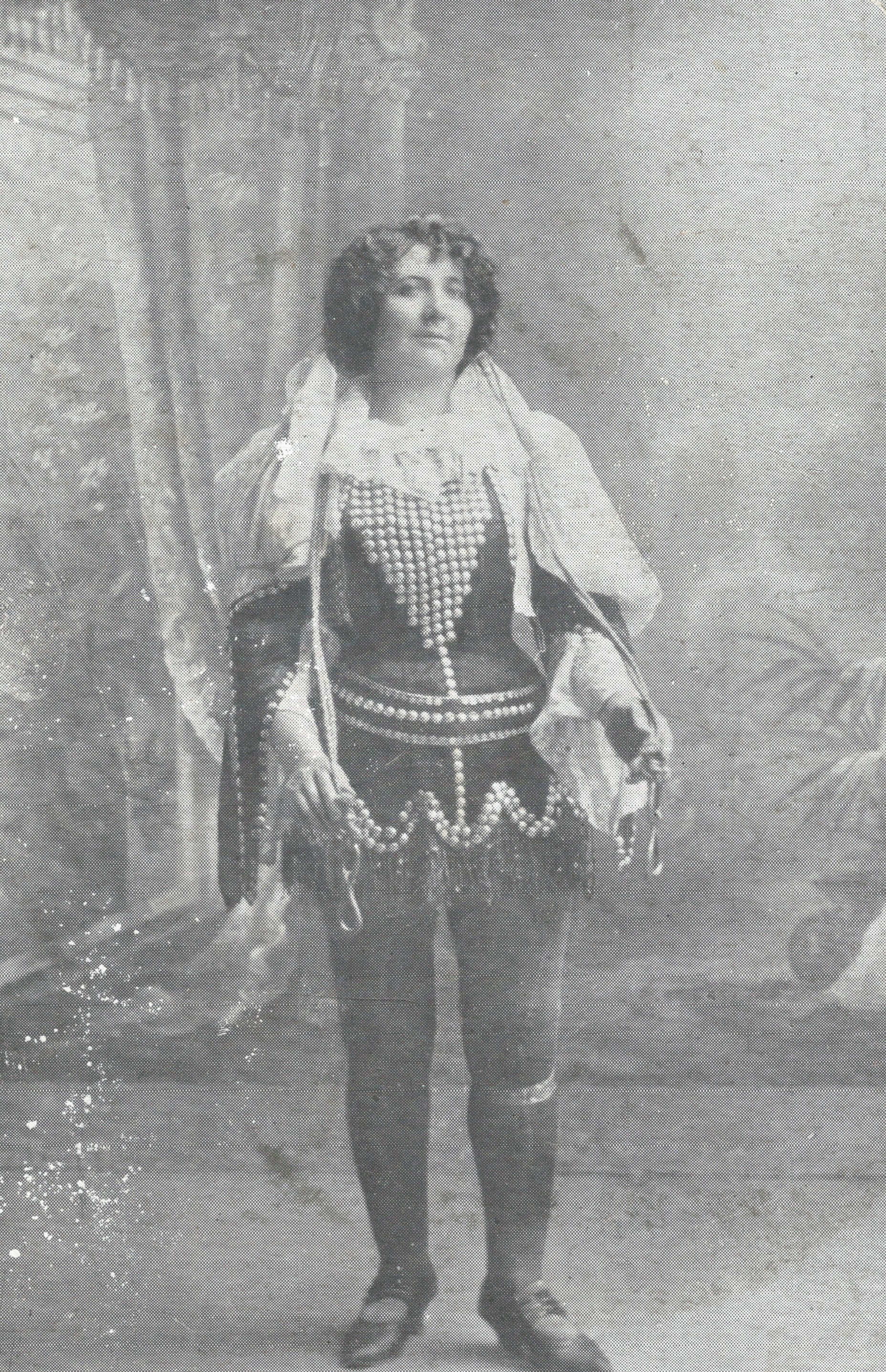
imageGaby Deslys was a French singer and dancer who started off in the chorus line and became a huge success in Paris, London and New York. She was said to be charming, deeply religious, but with a quick temper and ‘One who knew her‘ writing in the Globe claimed she lived an abstemious life, seldom touching wine, never gambling and allowing herself to spend lavishly only on clothes. As well as Selfridge, Gaby also had a long lasting affair with the King of Portugal which it was widely assumed continued after his deposition, although she refused to talk about it. He was reputed to have given her a necklace worth about £40,000 after their first meeting. No wonder she saved her own money with admirers like these. Despite the generosity of her admirers Gaby made some extra money by promoting Reudel Bath Saltrates which, it was claimed, would get rid of superfluous fat, double chin and thick ankles. It came in convenient half-pound packets and was ‘quite cheap’

Gaby’s affair with Gordon Selfridge ended and she died, aged 38, in 1920 from complications of a severe throat infection as a result of catching influenza during the serious epidemic of the time. She had several operations but would not allow surgeons to cut into her throat as she did not want a scar. She left her fortune to the poor of her birthplace, Marseille, and specified that her villa should be turned into a hospital for the poor.

image

Villa Gaby Deslys

After her death a Hungarian man, Mr Navratil, put in a claim for Gaby’s estate on the grounds that his daughter, Hedwige Navratilova, was in fact Gaby Deslys and that she did not come from Marseille. This claim was made ten years after Gaby’s death and Mr Navratil and his wife had lost touch with their daughter for some years. Hedwige was living in Biarritz and bore a remarkable resemblance to Gaby Deslys. The newspapers of the time don’t make it clear how the claim would work if Gaby was still alive but had died and left a will! Two business men who had known Gaby Deslys for thirty years supported the fact that she was from the Caire family of Marseilles, her real name being Gabrielle Caire. They said she ‘spoke with a Marseilles accent, and although she knew a little English, she was not acquainted with any Central European language‘. Mr Navratil was unsuccessful in his claim.

Thanks to the British Newspaper Archive


More pantomime

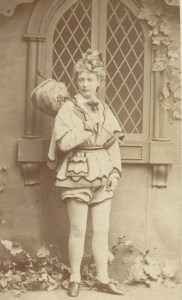
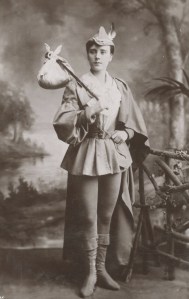
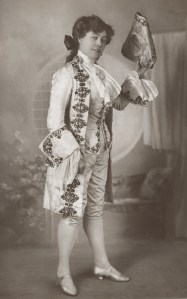
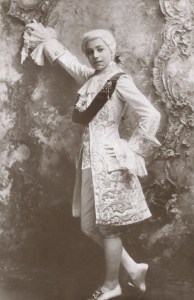
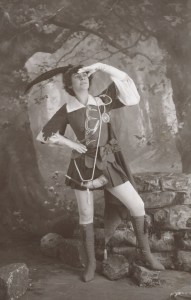
So here we are coming to the end of the pantomime season. In Victorian and Edwardian times we could have witnessed music hall stars dressing up in gorgeous finery as Prince Charming or Aladdin. Elaborate hats and hairstyles were the order of the day with costumes of silk and lace which  would hopefully inspire awe and wonder in the audience. Here are just a few of these wonderful women.

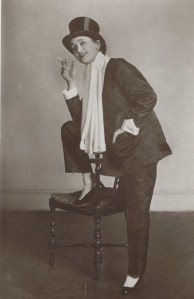
From left to right: May Beatty as Dick Whittington, Dorothy Ward as Robin Hood (smoking!), Carrie Moore in Cinderella and Hetty King as Aladdin.

Marie Lloyd played the part of Red Riding Hood at the Theatre Royal, Drury Lane in 1892. At one point, Augustus Harris who was managing the production, wanted Marie to say her prayers before going to bed in her grandmother’s cottage. She knelt down and clasped her hands but instead of saying her prayers suddenly felt under the bed for the chamber-pot. Not finding it, she searched the whole room, accompanied by loud laughter from the audience. Augustus Harris did not join in the laughter and Marie was close to getting the sack.

Marie Lloyd 2

Marie Lloyd

Pantomimes would often run for three months and provided a steady income in a precarious world. There could be other perks if the show was successful as the trade paper, The Era, tells us. On the last night of The Forty Thieves at the Theatre Royal in Hull the star, Miss Annie Montelli, was presented with a silk umbrella, a dressing-case, a box of gloves and a pearl and coral ring. It’s not clear if these gifts were from admirers or the theatre management. David Beattie, in the same production, was given a silk handkerchief and tie, a cigar case and cigars, a large pork pie, a Madeira cake, a bologna sausage and a bottle of whisky by his admirers in the audience.

image

Birdie Sutherland

Birdie Sutherland took on pantomime roles and in 1901 described as the ‘bountiful Birdie Sutherland’ was engaged to play in the Drury Lane panto to be produced in New York. She had become a household name some years earlier when she sued the Hon.Dudley Majoribanks for breach of promise. The engagement had been announced and then denied by the young man’s father, Lord Tweedmouth. The newspaper reports take an amused tone, assuring us that the couple were devoted to each other with Birdie becoming ill and retiring to the country on the break up of the relationship. The Hon.Dudley was sent to Canada in the hope of curing him of his infatuation with Birdie. When the case was heard the court was beseiged with people wanting to enter but numbers were restricted and those present heard the Lord Chief Justice find in favour of Birdie Sutherland, awarding her £5000 damages plus costs. There is no comment from Lord Tweedmouth. A bit of an “Oh yes she will. Oh no she won’t” situation. Sorry, couldn’t resist it. The bad jokes are the best!

Thanks to the British Newspaper Archive

Pantomime


Dick Whittington as played by Miss E Beaufort, early unknown, Vesta Tilley and Hetty King

Pantomime season is here, although in Victorian times you’d have heard the cry, ‘Oh, no it isn’t‘ as pantomimes traditionally started on Boxing Day. The Theatre Royal, Drury Lane in London set the benchmark for pantos all over the country but in the 1870s the theatrical Vokes family monopolised the production, a strategy which ultimately failed as it was reported ‘they were on stage far too long‘ and were ‘sublimely indifferent as to whether the story of Cinderella be a Sanskrit myth or a Greek fable‘. The production closed early, losing money and the following year the pantomime was staged by Augustus Harris. Harris hit on the idea of incorporating music hall stars into his shows and putting on spectacular scenes often with four or five hundred people on stage. The pantomime could last for anything up to five hours and Harris’s successor introduced an interval part way through finding that this contributed to a considerable increase in the sales of refreshments.

Such spectacular productions demanded dedication from the cast and the trade paper The Era gives us a taste of the hectic preparation for a panto. ‘The pantomimes are now in excellent working order, and attracting large audiences. Refractory traps have become obedient — fairy cars no more require the palpable hand of the stage carpenter to appear with a dingy shirt-sleeve in the midst of them, bewildere ballet-girls and stupified super-numeraries are found no longer rushing on in the wrong scene and never appearing in the proper one, the stage arrangements at last develop the original intention of the designers’. The trap is the star trap mentioned in a previous post through which the performer was propelled at speed, not without risk to life and limb. Some newspapers carried a special section of pantomime accidents and we find in 1861 that in one production a member of the cast was wounded when a pistol shot was misdirected and in another there was an escape of gas and an explosion.

image

Carrie Moore as Robin Hood

The introduction of music hall stars caused dismay in some quarters as they would perform their particular specialities which interrupted the story being told. Eccentric dances, acrobatics and topical songs were added to cash in on the popularity of the performer. Women from the music hall often took the part of principal boy wearing elaborate costumes and showing a shapely leg. Vesta Tilley was once engaged by Augustus Harris to play in Dick Whittington but just before rehearsals began the pantomime was changed to Beauty and the Beast and Vesta was to play the Prince. She found that that after the second scene the Prince was changed into the Beast and she would have to wear a mask until the final scene when the good fairy would change her back into the Prince again. Vesta was not happy with this and came up with a solution. She stipulated that she would not appear in the scenes in which her character was masked but would reappear for the final scene. This meant she could perform her own act in nearby variety theatres and she claims to have trebled her salary. Her role in the masked scenes was taken by John d’Auban but we don’t know how the audience felt about the substitution.

There’s so much to write about pantomime that the next blog will cover it as well. Oh, yes it will!


Thanks to ‘Recollections of Vesta Tilley’ and Westminster Reference Library

In the courts

Music hall artistes, stars or unknowns, were no strangers to the courts and the newspapers had a field day reporting drunken escapades, thefts, adultery, assaults and disputes between managers and performers. Not quite respectable but still a good source of entertainment on and off the stage. In London, March 1897, Lily and Ellen Brown were charged with being disorderly and using obscene language. Shrieks and cries were heard around two in the morning in the Regent’s Park area where two young men accused the women of robbing them in a cab. The men refused to bring charges and the Misses Brown used ‘filthy and most disgraceful language — creating so great a disturbance that the whole neighbourhood was roused’. They said they had been taking part in a ballet at the Empire Theatre and were on their way home. The magistrate felt that dancing in the Empire ballet should have been sufficiently exciting for them and that they seemed to have an exuberance of artistic talent. They were fined ten shillings.

May Levey

May Levey

The Sisters Levey were a popular song and dance act but were subjected to ‘clowning’ by a cellist in the orchestra at the the Royal Court Theatre in Liverpool. ‘Clowning’ was the term used for purposely substituting the wrong music during a music hall act. The cellist, Frank Richardson, also absented himself from the orchestra during the performance. He was sacked and went to court to claim £4 10s (£4.50) for wrongful dismissal. He claimed it was customary for a musician to leave the performance for a few minutes if not needed for the piece but the theatre management responded that he was absent during the playing of two numbers, in one of which he was a soloist. The conductor appreciated that Frank Richardson was an excellent cello player but he had frequently been reprimanded for ‘clowning’ which took place when the Sisters Levey were on the stage and they had complained. The judge found against the cellist remarking that he had been properly dismissed, considering his conduct.

Marie Lloyd seems to have spent quite a lot of time in court on her own behalf or connected to other cases. In January 1893 her husband, Percy Courtenay, summoned Bessie Bellwood for assaulting him at the Trocadero Music Hall. Bessie Bellwood, a former rabbit skinner from Bermondsey, was a fiery character who gave hecklers a hard time. Although a devout Roman Catholic she was known for her strong language on and off stage. Like many music hall performers she was a heavy drinker which might explain her tendency to lash out when riled. This case was adjourned and all parties seemed to have calmed down as it wasn’t pursued.

Marie Lloyd

Marie Lloyd

Marie Lloyd  took her coachman to court in 1896 for stealing a gold watch and diamond ring from her. Herbert Norton, aged twenty-four, had worked for Marie Lloyd for two years and disappeared one Saturday without notice. The ring was missing and found at a local pawnbroker’s along with the gold watch. Marie Lloyd was notoriously soft-hearted and generous and rather than prosecute Herbert she sent a telegram to his address saying if he returned the items by six o’clock she would not go to the police. She heard nothing but on Monday a parcel arrived containing Herbert’s uniform breeches, a tie and two pawn tickets. She sent the parcel back and went to the police. At the trial Marie Lloyd said, ‘Herbert, if you had asked me to forgive you I would have done so’. Apparently Herbert had robbed her before but she had forgiven him. The magistrate asked Marie if she desired to recommend him to mercy now to which she replied, ‘Oh, yes, please’. Herbert was sentenced to two months’ hard labour.

Cissie Loftus

Cissie Loftus

Next, the sad case of Cissie (Cecilia) Loftus who was a popular and gifted mimic on the music hall stage. In 1922 she was arrested for the possession of drugs and also had blank prescriptions in her bag. She told the arresting detective that she was undergoing a cure and a court case would ruin her. It was said in her defence that that she had had a long period of ill-health through which she had to work as her husband had left her with large debts. Drugs were administered to her during a serious operation and during childbirth and she became unable to resist them. Cissie said she had become almost afraid to appear on the stage and drugs helped her. She said her friends knew she was trying to free herself from the drugs habit. The judge ruled that she be placed on probation for a year on the condition that she went into a home for six to twelve months where she would be under strict medical supervision. Two of Cissie’s friends undertook to see that she complied with the terms of the judgement.

Less seriously, but still worthy of a court case, a waiter at the Tivoli Music Hall in London was charged with unlawfully offering cigar ends for sale. There was said to be a thriving trade between the music halls and cigar makers in the East End who used the ends to make cheap cigars. An attendant at the Pavilion Music Hall was prosecuted on behalf of the Inland Revenue with selling cigar ends without a licence. One line of defence was that in Paris and New York this was considered an acceptable business but the Inland Revenue wanted to stop the collection of cigar ends in large places of entertainment. Do you think they succeeded? The case was adjourned.

Thanks to britishnewspaperarchive.co.uk

Vesta Tilley

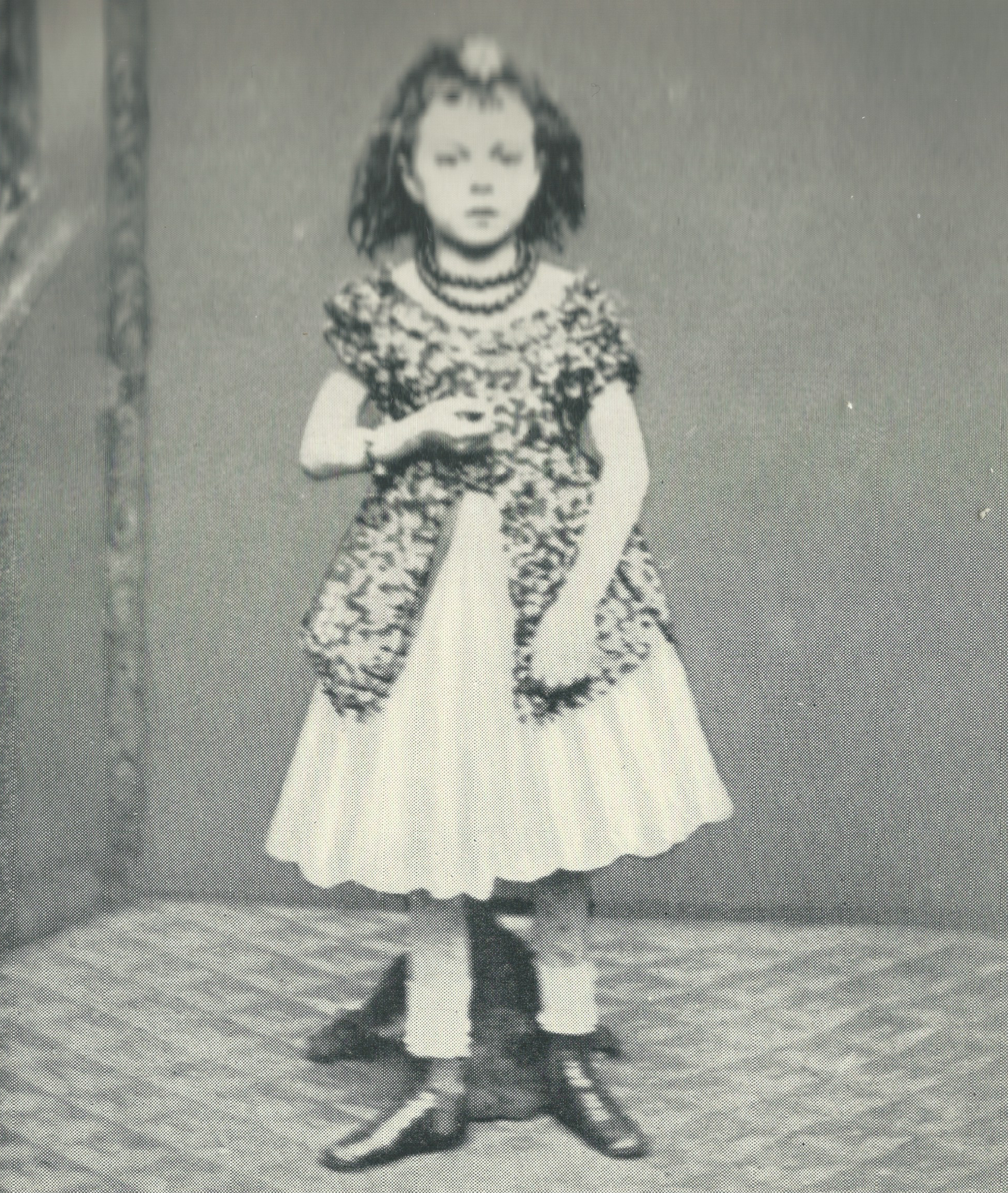
The Vesta Tilley exhibition is coming along nicely so I’m going to use the info to blog about her as well. Born in Worcester in 1864, Matilda Alice Powles was the second child in a family of thirteen. Her father was a china painter and amateur musician who developed an act featuring Fathead, the family dog. As he became better known he was offered the job of manager of a music hall in Gloucester. He accepted and became responsible for managing the hall, booking the performers and acting as chairman for the evening. Tilley would go with her father to the music hall and sit with him, memorising the songs and singing them at home. When her father was offered a better job at St George’s Hall, Nottingham, Tilley sang at his benefit when he left Gloucester. This was her first public appearance. She went on to appear at St George’s Hall as ‘The Great Little Tilley’ at four years of age.

Aged four

Aged four

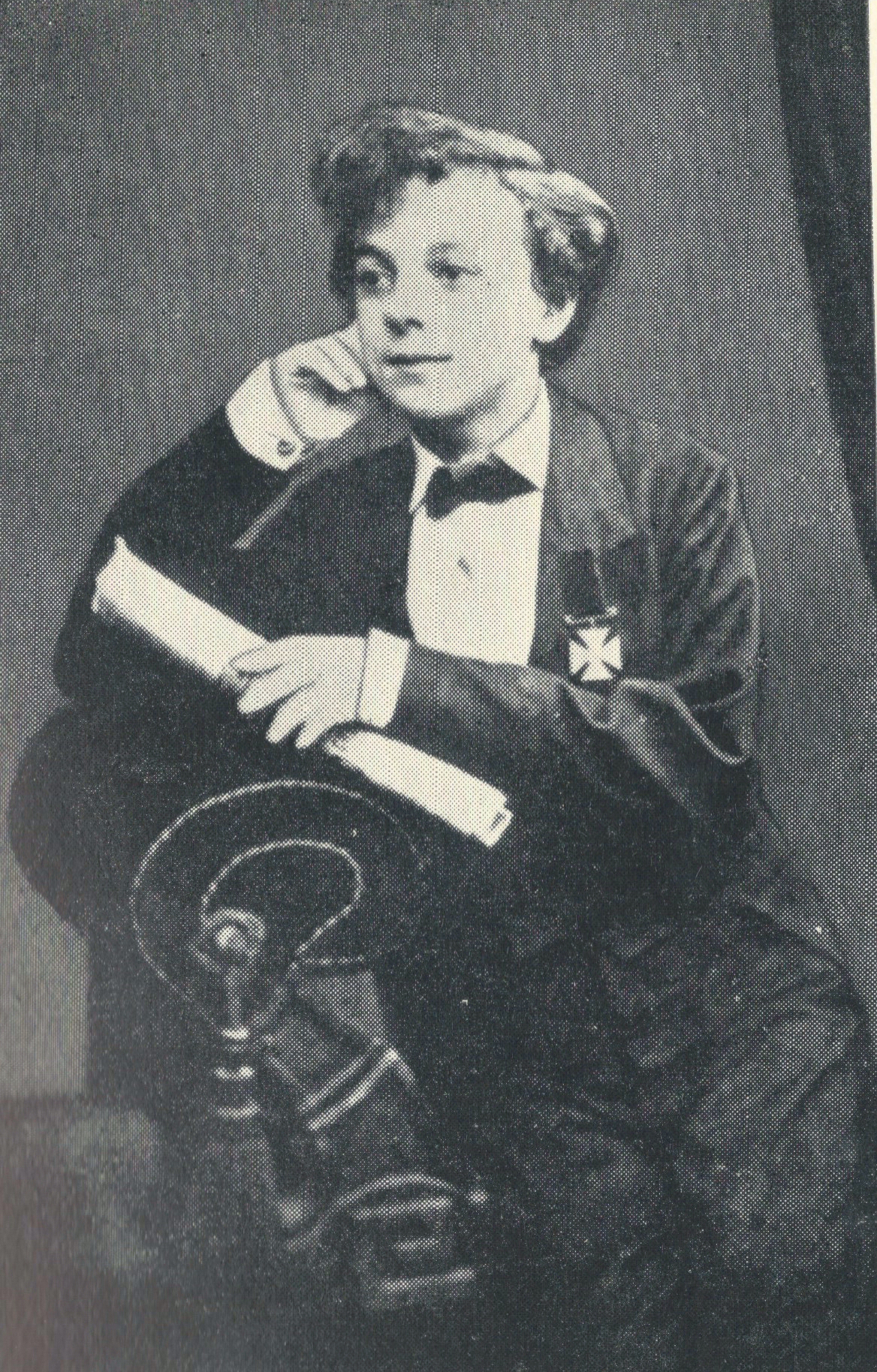
Vesta Tilley says in her autobiography that she felt she could express herself better if she were dressed as a boy. One night she took her father’s hat and coat up to her bedroom and put them on. He came in and found her in front of the mirror singing and acting a song usually sung by a man. Her father got her a little evening dress-suit and she kept the jacket all her life. At this time there was a popular tenor called Sims Reeves and she learned some of his songs. She was billed as ‘The Pocket Sims Reeves’ and wore her dress-suit and a large black moustache. She was five years old.

The dress-suit

The dress-suit

Audiences were not sure if ‘The Great Little Tilley’ was a boy or a girl so her father wrote down three names from the dictionary and put them in his hat. She drew ‘Vesta’ and so Vesta Tilley was born.

Dick Whittington

Dick Whittington

Music hall stars often doubled as principal boys in pantomime and Vesta Tilley was no exception. Her favourite role was Dick Whittington. It was during a pantomime that Vesta met her future husband, Walter de Frece, son of a theatrical proprietor who was a friend of her father’s. She and Walter married in 1890, two years after the death of her father and Walter became her manager, also following his father into music hall ownership.

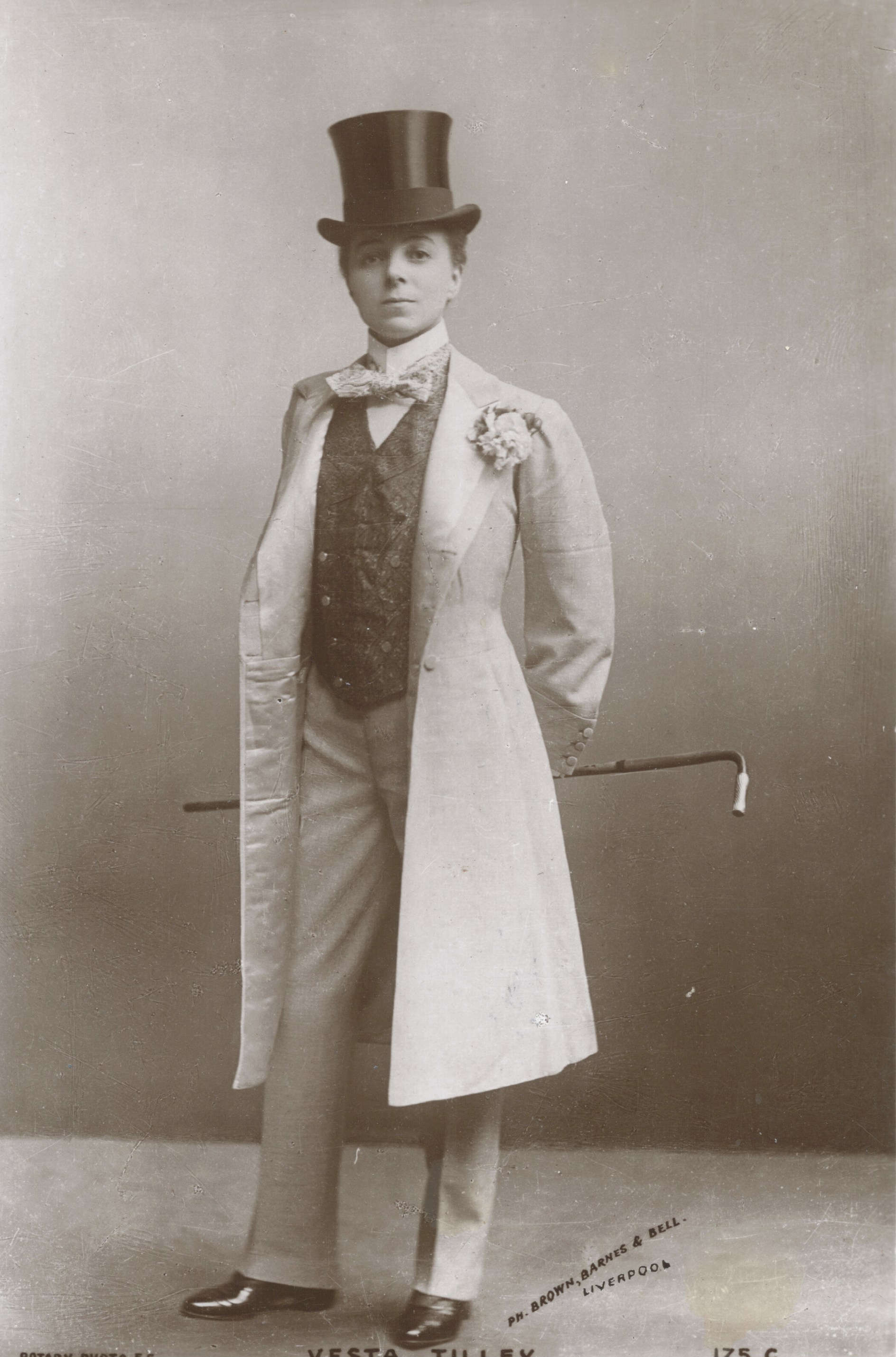
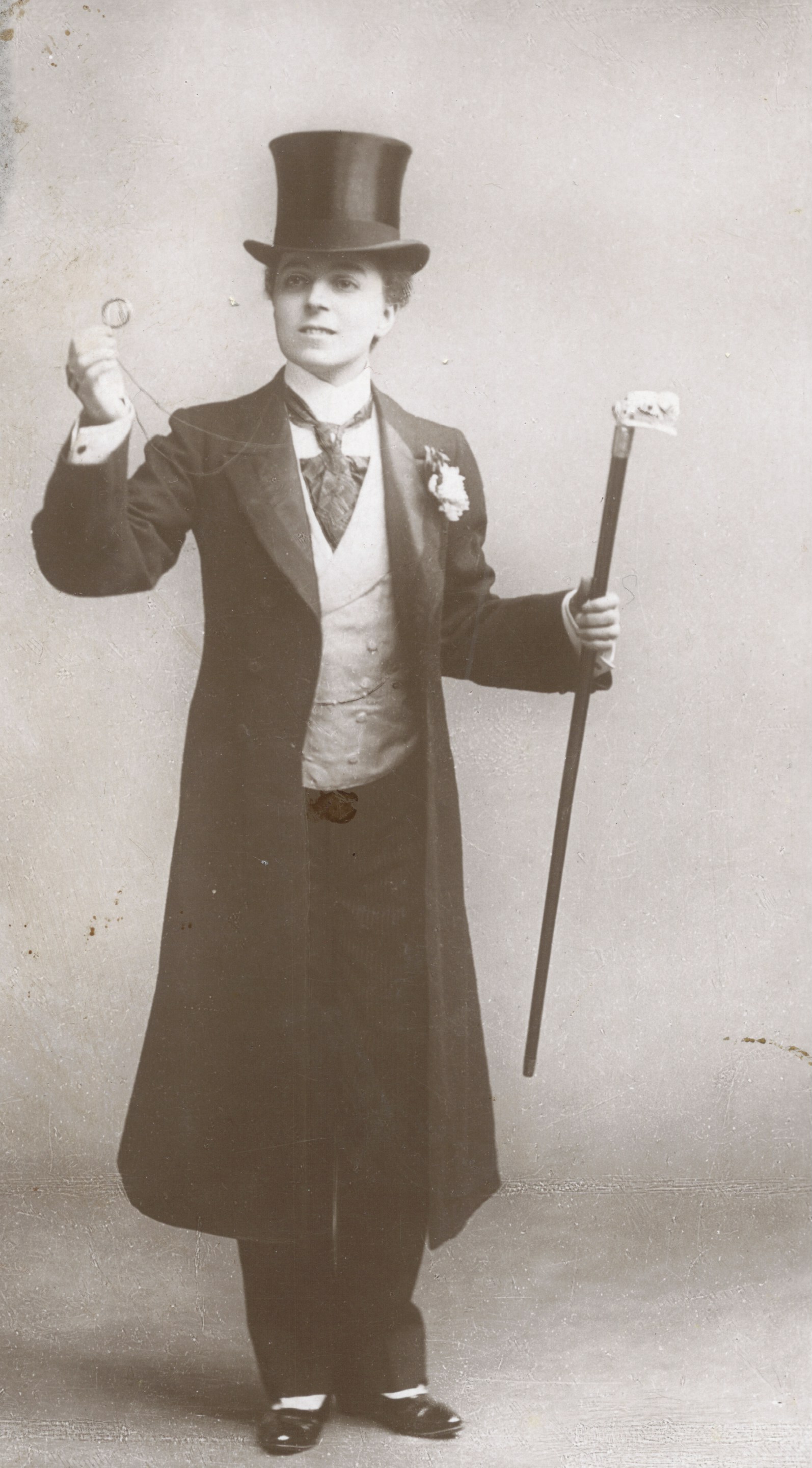
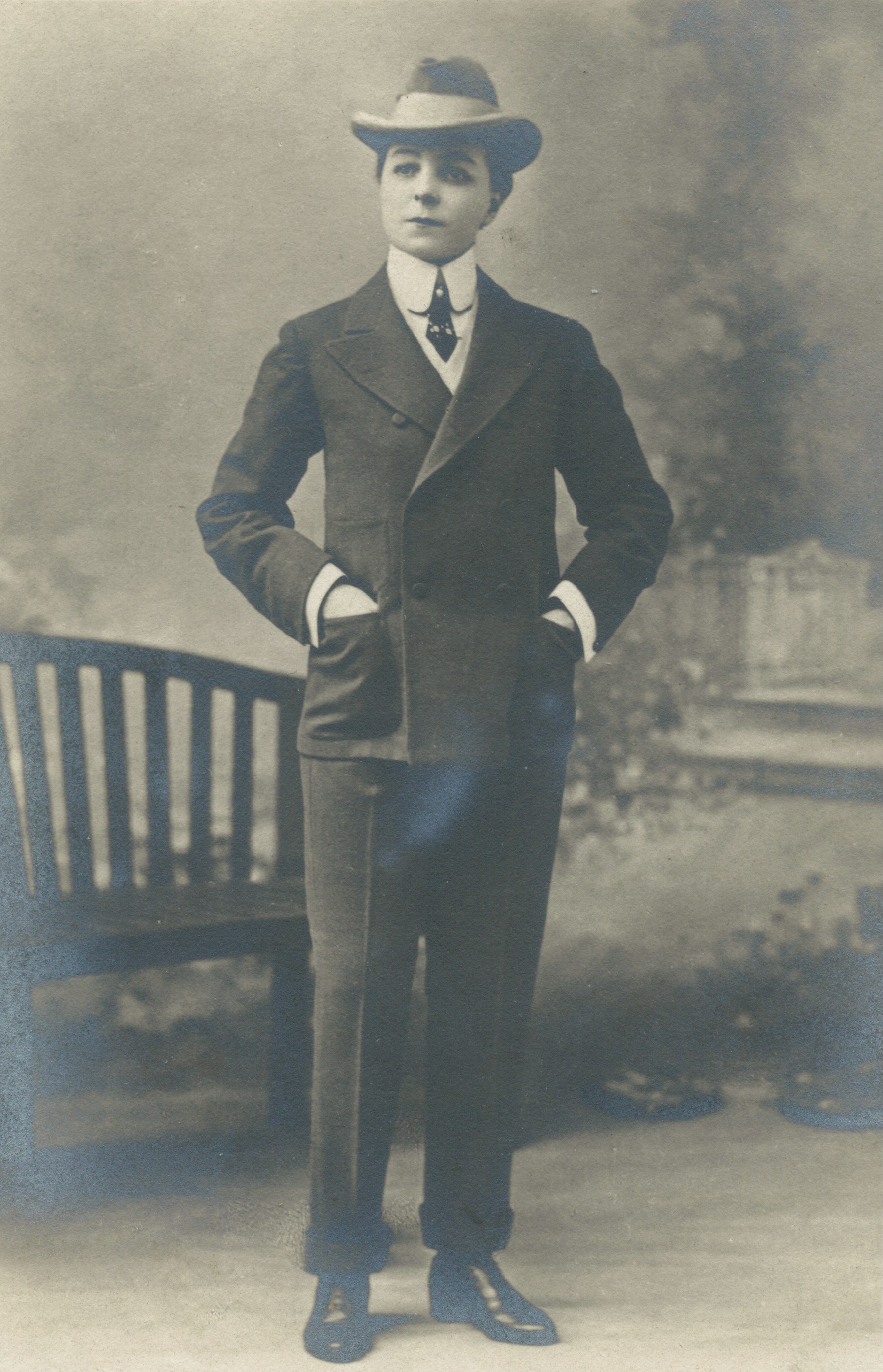
Vesta Tilley portrayed characters recognisable to her audiences that reflected the times she lived in. The ‘masher’ was a favourite character. He was a man about town and a dandy wearing the latest fashions. Vesta sang about the toffs but also about the clerk on his one-week holiday who imagines himself a swell. Her costumes were made by a Bond Street tailor in London. There were lightning costume changes between each song. She kept her hair long and wound it into small plaits to go under her wig and when off-stage was always careful to dress in very feminine clothes.

Boater, waistcoat and cigar

Boater, waistcoat and
cigar

The masher

The masher

Off-stage

Off-stage

She was hugely popular at home and a favourite in America too, becoming a leader of men’s fashions in the States with outfitters producing the Vesta Tilley boater and the Vesta Tilley waistcoat. Fans could also buy the Vesta Tilley cigar. Vesta Tilley was invited to take part in the first ever Royal Command Variety Performance at the Palace Theatre, London in 1912 which gave the music hall a seal of respectability. Vesta sang ‘Algy, the Piccadilly Johnny with the little glass eye – the most perfectly dressed young man in the house’. There are stories of Queen Mary being so shocked at the sight of a woman in trousers that she buried her face in her programme and advised other ladies in the royal box to avert their eyes.

Algy, the Piccadilly Johnny

Algy, the Piccadilly Johnny

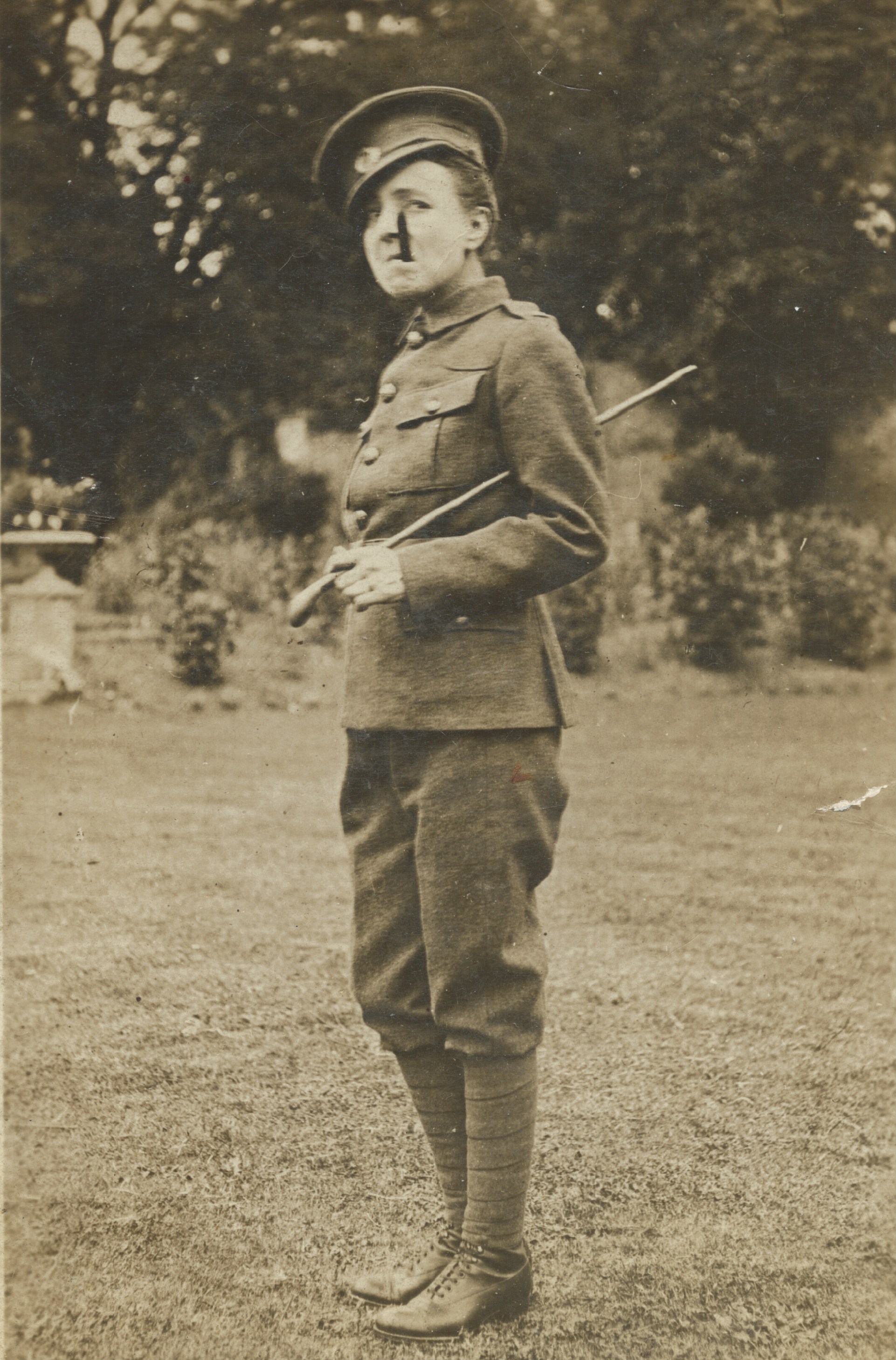
Vesta Tilley often used a uniform to help define her characters. Before conscription was introduced during the 1914-18 war she would assume a military role on the stage and encourage men in the audience to enlist. There is an archive recording of a woman called Kitty remembering her young husband being recruited in this way. They were at a music hall watching Vesta Tilley who went into the audience and touched Percy on the shoulder. He went on to the stage with other young men and joined the army. He was killed on the Somme and his body was never found. Kitty was pregnant and later gave birth to a son. Vesta Tilley was known as ‘Britain’s greatest recruiting sergeant’.

She impersonated policemen, judges, telegraph-boys and vicars noting walks, mannerisms and facial expressions. Although she was under five foot tall she was able to convince her audience of the truth of her characters.

The recruiting sergeant

The recruiting sergeant

The telegraph-boy

The telegraph-boy

Vesta Tilley retired in 1920 at the age of fifty-six and her farewell tour around the country took a year. Her last appearance was at the London Coliseum where she was presented with books filled with nearly two million signatures and it took two pantechnicons to carry the flowers. Her husband was knighted the same year and so Vesta Tilley became Lady de Frece. In retirement she supported her husband during his political campaigning and he became a Conservative MP. When he retired they moved to Monte Carlo. Her husband died in 1935 and she moved back to London, living in a flat overlooking Green Park. At the age of eighty she took a lease on a flat on Hove seafront where a blue plaque pays tribute to her. Vesta Tilley died in September 1952 at the age of eighty-eight and still had the little dress jacket and her wig stained with greasepaint. From poor beginnings she became the highest paid music hall performer but was said never to have forgotten her roots, always being proud of the fact that her greatest fans were working-class women.

Dipping into the postcard collection

Preparing for an exhibition to accompany a one-woman show about Vesta Tilley, featuring Claire Worboys  so blog time is limited. This is mainly pictorial which makes it easier for me and, with a bit of luck, interesting for you. A new addition to the collection is Mignon Tremaine, a singer and dancer with a name I couldn’t resist.

Mignon Tremaine

Mignon Tremaine

Vesta Tilley impersonated men who were very recognisable to the music hall audience. Her costumes were made by tailors in Bond Street, London and were meticulous in their detail.

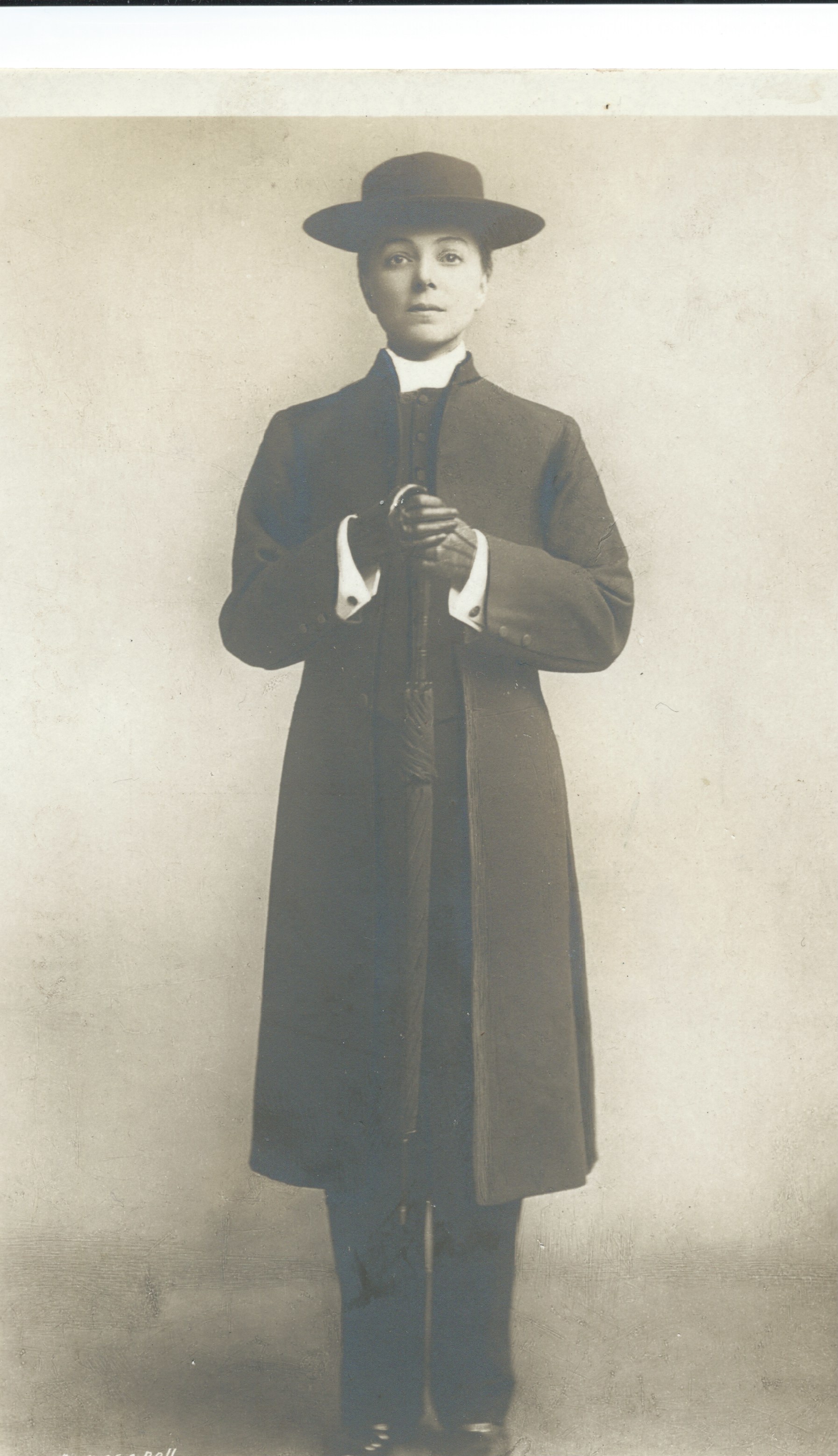
Here, she is a curate and makes it work through facial expressions and mannerisms as well as costume.

Vesta Tilley, vicar

Vesta Tilley, curate

Ukuleles are popular again and we can nod sagely and point out there is nothing new under the sun. This is probably a later card as the young women have short hair, possibly wigs, and strappy tops. Eccentric dances to accompany songs were popular in earlier music hall and, although I subscribe to this form of dancing, it’s not generally found on theatre stages these days.

Eccentric dance

Eccentric dance

Ukulele players

Ukulele players

image

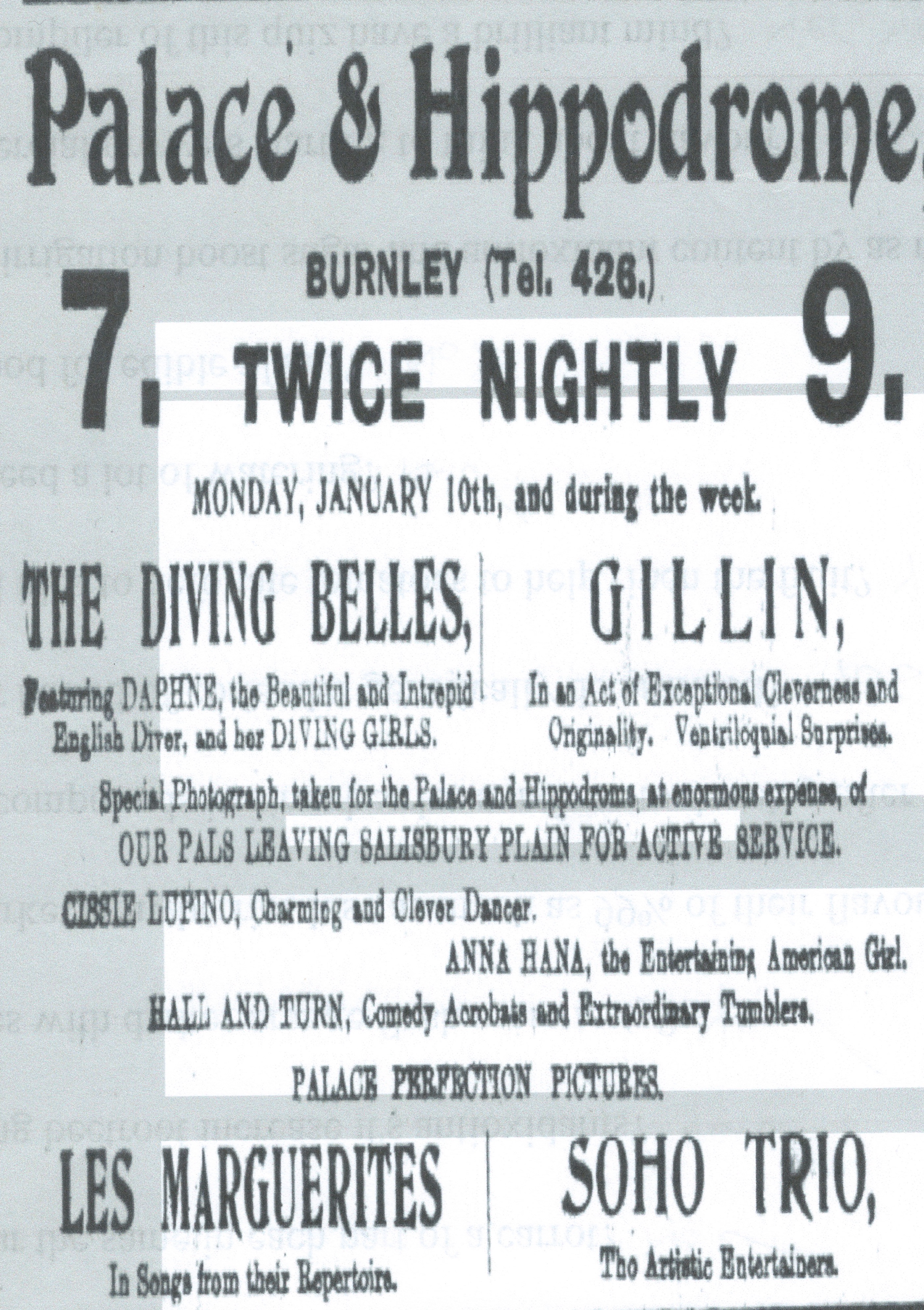
The Diving Belles

The Diving Belles

Lastly, an advert for the Diving Belles, mentioned in a previous post. Daphne obviously caught the publics’ interest as she is often mentioned in reverential tones. As leader of the troupe she has the privilege of sitting down. You can click on the advert and dance picture to get a larger image.

All but forgotten

Today we’ll look at some lesser-known artistes of the music hall and beyond. The work wasn’t always a choice as young girls could be pushed into singing in pubs and rough drinking establishments, often working very long hours cleaning and waiting at tables for very little money. One can only guess at what they had to put up with. More established performers worked on various circuits, some more prestigious than others. Once they had signed a contract with one of the syndicates that controlled the circuits they were not allowed to work in halls on other circuits. At one point artistes could not work on other circuits even if their engagements with their own circuits were months ahead or they were offered work in a nearby hall. It was virtually impossible for an individual to set up a new music hall as performers would be barred from working there. In established halls artistes were obliged to work matinées for no extra pay if the management put a formal advertisement in the trade publication called ‘The Performer.

Malvina Dunreath

Malvina Dunreath

This is a photo of Malvina Dunreath who is described on the card as an instrumentalist, singer and long boot dancer. It’s hard to tell how old she is but she’s dressed as a young girl. From a distance and with poor lighting the audience might have believed she was very young. I would be grateful for any information on her, having found only brief references to her over a few years. She appeared at the Gem Picture Hall in Tring in 1914 billed as a comedienne and dancer and at the Panopticon in Lanarkshire in 1915. In April 1917 she is at the Hippodrome, Chesterfield in an ‘Expensive Engagement, direct from London of the Revue of Revues.’ Malvina Dunreath is presented in ‘song and dance.’ The last reference I can find is of an appearance in Derry in August 1918. She is mentioned as ‘one of three first class variety numbers drawing crowded houses.’ Malvina Dunreath’s contributions ‘readily win favour for her.’ There is no mention of the long boot dancing.

Madame Herculine

Madame Herculine

Herculine, or Madame Herculine, performed feats of strength. She is wearing a garter in the photo and this seems to have been adopted by strong women as can be seen in earlier posts on Vulcana and Maud Atlas. It looks as if Herculine is wearing rather unsuitable shoes for her profession with heels and thin straps but maybe it made balancing easier. She was also known as the lady Samson and ‘Madame’ was used as a term of respect. In 1908 she was performing at Humber’s Waxworks in Aberdeen to large crowds. It was said she was the most marvellous person ever to have appeared at the waxworks. The pinnacle of her performance was lifting a barrel holding twenty-two gallons of water by her hair. January 1911 sees her in Kirkcaldy at the Olympia Roller and Skating Rink and she is there for one night only described as ‘La Belle Herculine – astounding and daring feats of strength.’ The advertisement goes on to say, ‘Madame will sustain upon her chest a local blacksmith’s anvil, weighing a quarter of a ton, while a horse-shoe is forged upon it.’ It adds, ‘Skating as usual from 7-11.’

In June of the same year Herculine visited Penzance Fair and was no doubt pleased to know that an R. Julyan George reported ‘I hereby certify that I have seen Madame Herculine’s performance and have examined her hair and head, and believe her to be genuine in what she does.’ Perhaps a wise conclusion as she was a strong woman. In August 1913 she was at Sunderland Town Moor Carnival lifting and firing a huge naval cannon. Finally, on the back of a card of Herculine, Percy writes to Walter, ‘Just a photo of my intended. What do you think of her? Expect wedding cake soon.’ Pity she couldn’t respond.

Thanks to the britishnewspaperarchive.co.uk and The Call Boy

Who sent the cards?

Sometimes the comments on the back of the postcards can be quite intriguing. On turning over a photo of Vesta Tilley we find a message from Ernest to Miss Eva Cooper in Dublin, sent from Glasgow in 1906. It says ‘we broke all previous records here yesterday. Had two of the biggest houses we ever had. Had a postcard from Holmes and one from Quigley...’ This sounds like music hall or theatre performances. Was Vesta Tilley involved? Was the postcard from Sherlock Holmes? The realms of fantasy are endless. Whatever the answers, it’s a wonderful photo.

Ernest's card of Vesta Tilley

Ernest’s card of Vesta Tilley

Then, as now, there were avid collectors of postcards but no short-cuts to finding that elusive special card. Nelly writes in 1906 apologising to her aunt, Mrs Thoruley in Bolton, as she can’t get the Vesta Tilley card she wants but instead sends one of Vesta with a cigar in the uniform of a soldier. Annie sends a card from West Hartlepool to Miss Turner to say it is the only one she can get of Vesta Tilley, this time holding a cigarette dressed as a young man about town. In 1905 Charlie is pleased to be able to send a card of Vesta at all as he has had to try several shops before being able to get it.

According to Norah in 1906 Hetty King has rather a nice face and Miss Greenhalgh of Southport receives a card from GS which says, ‘I believe you like sailors?’ This is written on the back of a card showing Hetty as a pipe-smoking sailor.

Hetty King - for anyone who likes sailors

Hetty King – for anyone who likes sailors

Bert also sends a card of Hetty the sailor to Aggie in 1907. It is rather touching as he writes, ‘you may expect me home on Fryday (sic). The boat leaves here at 9 o’clock but we don’t know what time we will get to Nottingham.’  

The card writers often apologise for their poor writing, explaining it is a ‘wretched pen‘ or they are writing while standing-up. Experience of trying to decipher these messages has taught me that handwriting was as varied then as it is now and was by no means an art form which has now been lost. I have a few cards sent to Seddon Cox Esq from Babs which are in mirror writing. They all feature Gabrielle Ray and Miss Craske and Babs remarks on the sauciness of the card shown here. I’ve included the back of the card as well for translation by the keener among you. Click on it and you should get an enlarged picture.

Mirror writing

Mirror writing

Gabrielle Ray and Miss Craske

Gabrielle Ray and Miss Craske

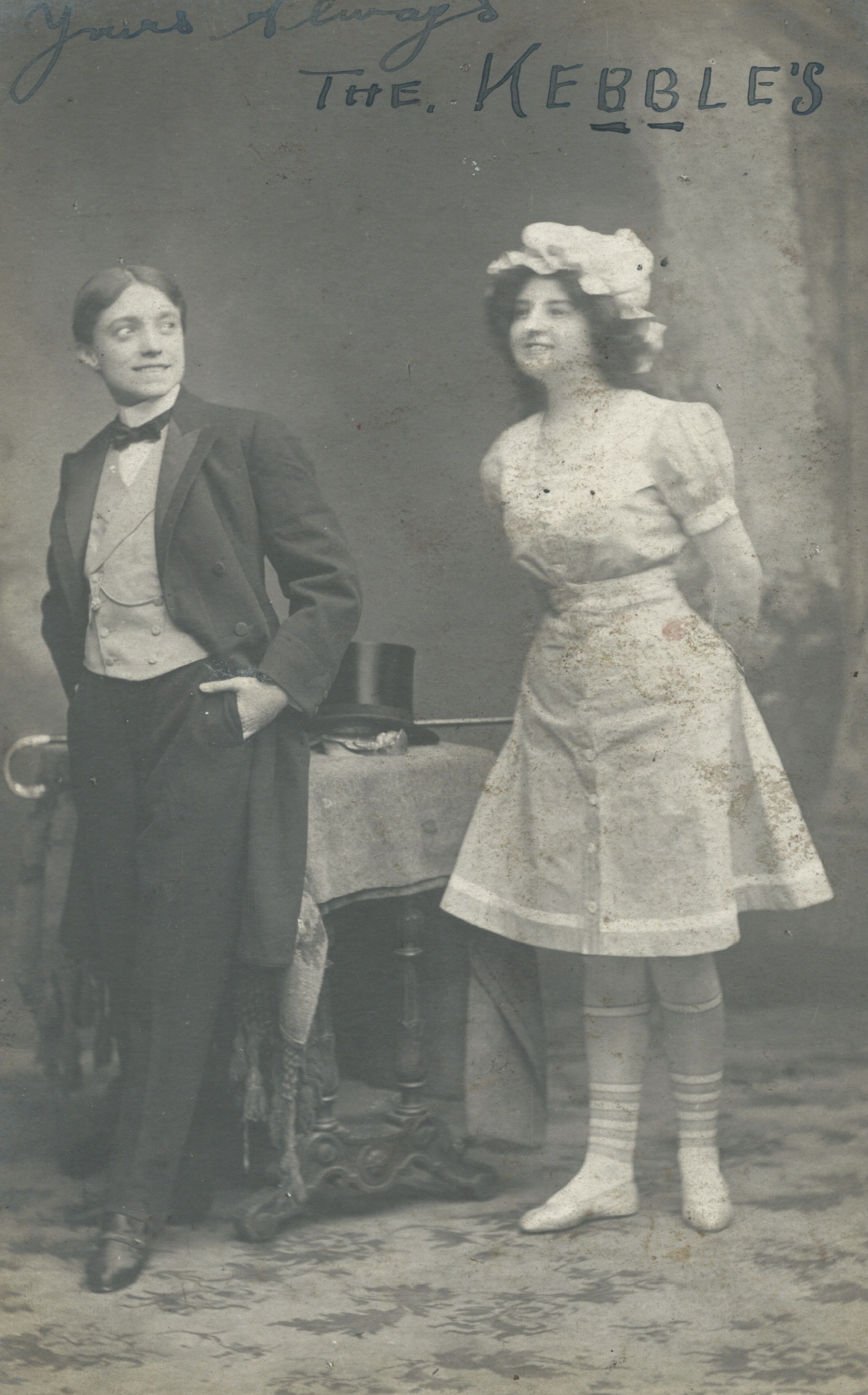
Performers used their own publicity postcards to communicate with boarding-houses and arrange meetings up and down the country. The Kebbles sent a card from Southport to Edward Stream telling him they will travel overnight to Edinburgh and asking him to call on them at their lodgings at Mrs Shaw’s.

The Kebbles card sent to Edward Stream

The Kebbles card sent to Edward Stream

Madeline Rossiter thanks Mrs Brown ‘in haste’ for sending on a handkerchief and Ruby Rowe asks God to bless Mr & Mrs Stream in 1921. Miss Effie Fellows ‘the one and only perfect boy’  uses her postcard to tell us she is the ‘one and only male impersonator who has dared to visit Scotland Yard, London, England in male attire without being discovered. She has repeated this stunt in every large city throughout the universe.’ 

Effie Fellows - the one and only Perfect Boy

Effie Fellows – the one and only Perfect Boy

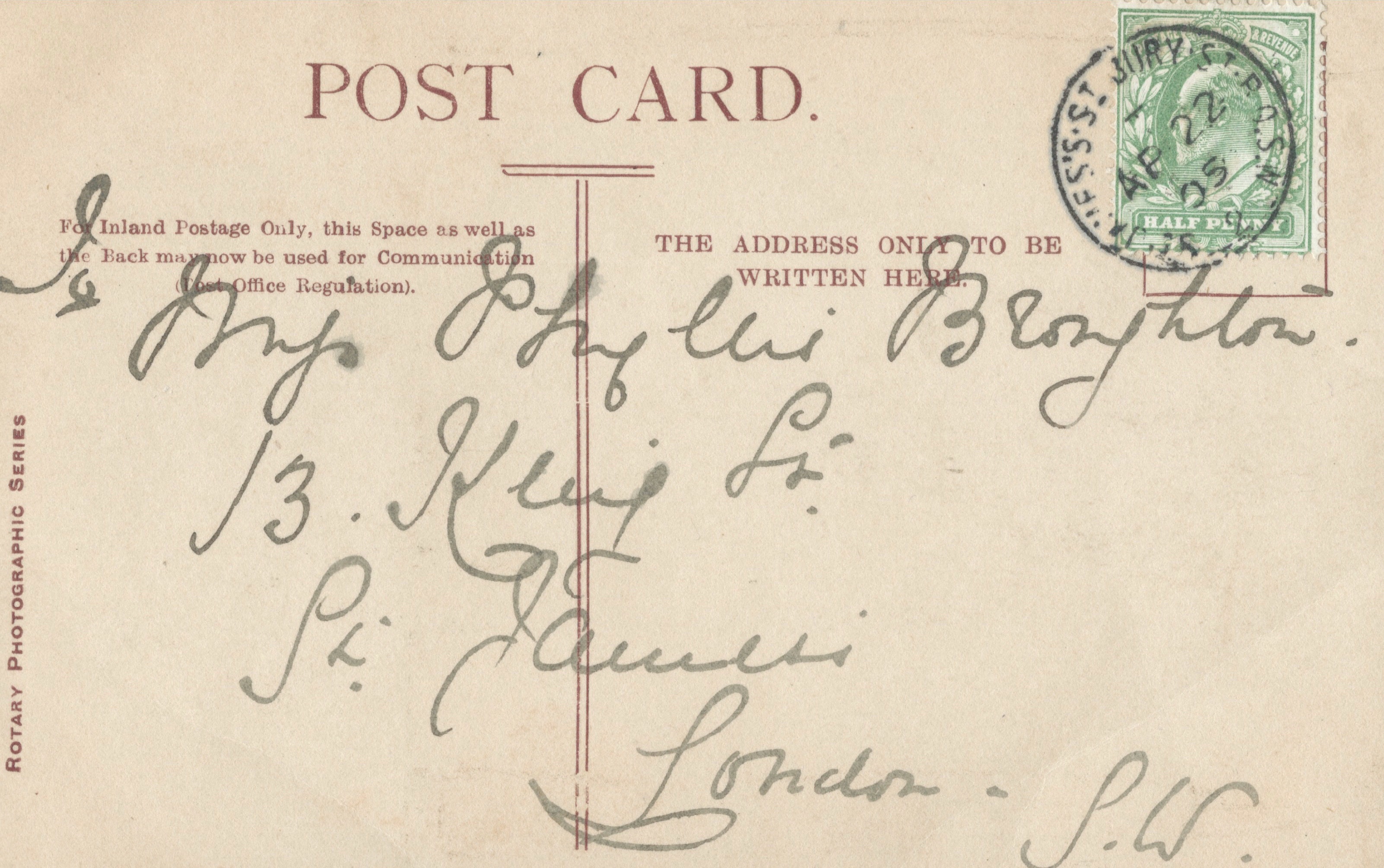
Last, but not least, is Phyllis Broughton who was a Gaiety Girl and appeared on the theatre and music hall stage. She addressed and stamped cards of performers to herself and asked them to sign and return them. I have a Vesta Tilley card and one of Sybil Arundale, an actress and star of pantomime and musicals, with Phyllis’s address on the back.

Postcard addressed to  Phyllis Broughton

An example of Phyllis Broughton’s self-addressed postcards

Phyllis Broughton was at one time engaged to a colliery owner, John Hedley, but sent him a telegram to break off the engagement when she received a marriage proposal from the heir to Earl Cowley. The heir subsequently jilted her so she sued him for breach of promise, winning the case and a substantial sum of money. John Hedley had built a house for Phyllis and he kept this empty but in good repair as a shrine to her. It is said he sent her a basket of fruit and flowers from the garden every week. When he died he left most of his estate to Phyllis but she had pre-deceased him. The house became a home for distressed actors and actresses.

Phyllis Broughton

Phyllis Broughton

Kitty Marion

Kitty Marion

Kitty Marion

The music hall offered women artistes a degree of independence not always found in the world outside but still left them open to the vagaries of music hall managers, hangers-on and the ‘casting couch’ mentality. Women were campaigning for the vote during the peak days of music hall and the halls reflected this as they reflected all life. Kitty Marion was a music hall artiste and suffragette. Born in Germany in 1871, she came to England in her mid-teens to live with her sister, Dora. She started her career as a singer in musical comedy and went on to appear in music halls billed as a singer or comedienne. She was a member of the WSPU (Women’s Social and Political Union) and for some years juggled direct action with music hall and pantomime work. She threw stones and broke a Post Office window during Lloyd George’s visit to Newcastle in 1909, was imprisoned for a month and force fed after going on hunger strike. Kitty’s account in the Aberdeen Daily Journal states she barricaded her cell with her plank bed and placed herself so that she would be injured if the door were forced. This resulted in the door being removed from its hinges. On being force fed, she resisted saying she was a professional vocalist and might injure her throat. When she passed a doctor on the stairs she smacked his face and then broke ten panes of glass in her cell. She gnawed a hole in her pillow and emptied out the contents, tore up a bible and set fire to her cell, being carried out unconscious.

WSPU hunger strike medal

WSPU hunger strike medal

In 1910 Kitty threw stones at the window of the Moss’s Empires Ltd who owned and managed music halls. She acted to call public attention to ‘the disgraceful state of the theatrical profession’ where ‘it is almost impossible for a woman to earn her living respectably on the stage’. This time she was bound over but became more involved in direct action, choosing imprisonment rather than a fine each time. She was force fed 232 times and received the WSPU hunger strike medal and, amazingly, managed to appear in pantomime shortly after. The numbered photo of Kitty Marion, above, is from the police surveillance files of the time. Militant suffragettes pulled faces and would not stand still when having their prison photos taken so the police resorted to covert photography. Kitty, of course, had her music hall postcards which the authorities could use.

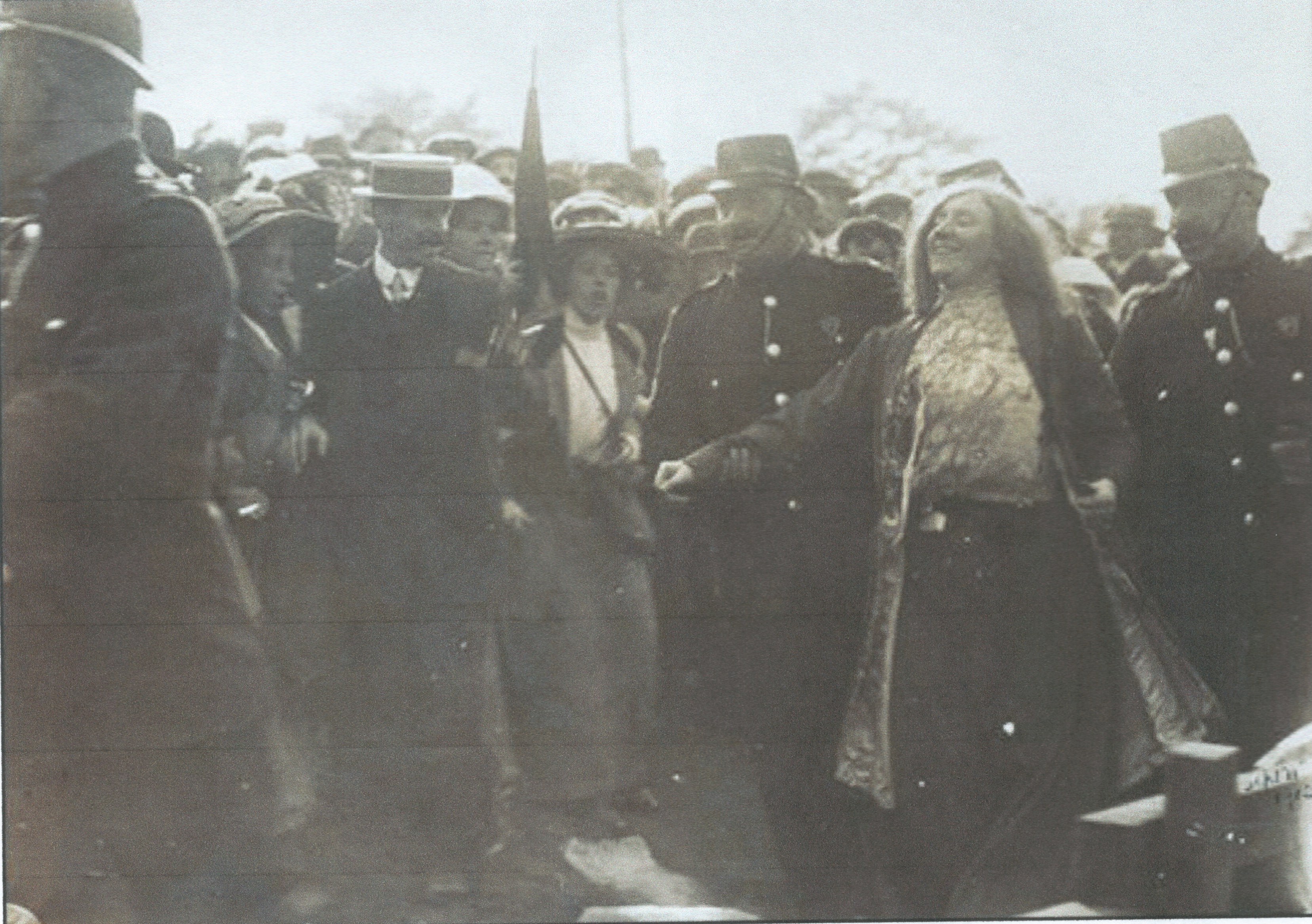
Kitty helped to form the Actresses’ Franchise League which sold suffrage literature and put on propaganda plays. She travelled the country working and protesting and in 1912 attended the National Eisteddfod in Wrexham where Lloyd George was to speak. He began to speak in front of an estimated crowd of thirteen thousand and each time he spoke a suffragette would shout their message. The women were bundled out but more took their places with the crowd shoving and pushing the women. It was reported that a large hank of auburn hair was torn from Kitty’s scalp and later exhibited at the offices of the Western Mail in Cardiff.

The arrest of Kitty Marion at the National Eisteddfod 1912

The arrest of Kitty Marion at the National Eisteddfod 1912. Museum of London

Kitty eventually gave up the stage for full-time action and was involved in an arson attack on the grandstand at Hurst Park race course. There is also strong evidence that she was responsible for an arson attack on the mansion owned by the the Hastings MP, Arthur Du Cros but she was never charged. In 1914, with the outbreak of war, she was threatened with deportation to Germany but was allowed to go to the United States instead, where she became a well-known activist, helping to establish America’s first birth control clinic.

Marie Lloyd was a staunch supporter of women’s rights and in 1909 had a small part in a suffrage play called ‘How the Vote was Won‘ at the Oxford in London. She is also reputed to have smuggled the militant suffragette, Annie Kenney, through the police cordon, into a theatre in a large hamper labelled ‘Marie Lloyd‘ so that she could speak to the crowd. Another performer, Wilkie Baird, took advantage of the political situation to sing an anti-suffragette song, ‘Put me on an island‘ with the refrain: Put me on an island where the girls are few/ Put me amongst the most ferocious lions in the zoo/ Put me on a treadmill and I’ll never fret/          But for pity’s sake don’t put me with a suffragette. Below are some anti-suffrage postcards.

imageimageNimagec

Thanks to britishnewspaperarchive.co.uk and eisteddfod.org.uk

Aquatic marvels

The Diving Belles

The Diving Belles

The never-ending search for novelty and excitement meant music halls staged acts that, even today, cause eyebrows to be raised and such is the reaction to the aquatic artistes who travelled country-wide taking with them enormous tanks in which to perform. The days of three or four performances a night in different halls were luckily a thing of the past by the time these performers took the stage.

In 1913 at the London Opera House in Kingsway twenty young women disappeared into a lake onstage. They calmly walked forward until they were under the surface of the water. A newspaper of the time tells us that each artiste was supplied with a cup of hot Bovril before and after the performance. Don’t try this at home.

In 1916 the Diving Belles were led by Daphne ‘the well-known intrepid English diver.’ Also in the troupe were Ada Langford, who represented Britain at the Stockholm Olympics where she proved to be one of the fastest swimmers in the world, and an unnamed swimmer said to be the youngest acrobatic diver appearing on the stage. This is the equivalent of celebrity reality television shows today and was a way for women to use their talents to find employment when opportunities were still limited. In March 1918 the Palace Theatre, Bath, has an advert for the Diving Belles featuring Daphne, ‘the beautiful and daring English diver and her divine girls. They are appearing in an elaborate sea cave scena Mermaids in Shells with clever and original tricks and fancy and acrobatic diving.’

Miss Sadie Premier Lady Diver

Miss Sadie
Premier Lady Diver

I’ve included Miss Sadie, premier lady diver, who appears to be wearing flippers, as I love the photo. All I’ve been able to find out about her so far is from a New Zealand paper which records she appeared in a film at the Queen’s Theatre, Canterbury diving and performing swimming feats in January, 1913.

Sisters Kirk and Saraski were described as aquatic acrobats and travelled round the country with their parents performing dives, somersaults and endurance feats under water. One sister held the record for an immersion of 4 minutes 18 seconds and at the King’s Hall, Gloucester, in April 1912 kept underwater for over 3 minutes. In January 1913 Frank Saraski and Anetta Kirk, parents of the performers, brought a court action against Frederick Morley who was the proprietor of the New Palace, Shirebrook. They claimed £17 damages sustained for alleged breach of contract. Morley cancelled the contract at the last minute by telegram but the artistes arrived at Shirebrook and were then unable to find another booking at such short notice. They travelled all over the country to perform and booked for months ahead to minimise train travel and expense. They did not work during the week of the cancelled contract. Mr Morley suggested they went on to Belper but the tank that travelled with them would have been expensive to move and the train timetable would not have allowed enough time for the water in the tank to be heated. The tank and scenery weighed over a ton and in winter it took 8 hours to heat the water to 90 degrees. Morley did not offer Saraski compensation when he arrived at the hall and refused to pay £2 travel expenses. The court found for Mr Saraski and Morley had a judgement made against him for £17.

Kirk and Saraski

Kirk and Saraski

Last but not least are Dickinson and Johnson, Crystal Tank Artistes, who performed around 1899. The stage paper, The Era, mentions their wonderful performances in a small tank of water. Alice Dickinson was often billed as Professor Dickinson and Queenie Johnson billed as Maud but no explanation seems forthcoming.

Dickinson & Johnson Crystal Tank Artistes

Dickinson & Johnson
Crystal Tank Artistes

Thanks to the British Newspaper Archive britishnewspaperarchive.co.uk