

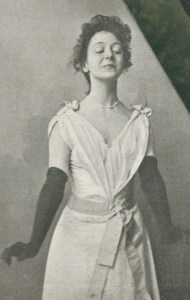
Lil Hawthorne was an American singer and comedienne, born in 1877. After various childhood acting roles she headed for the variety stage, aged fourteen, as one of the Three Sisters Hawthorne. There was a fashion for ‘sister’ acts at the time but, unlike many, the Hawthornes were three real sisters. They came to London from New York and in June 1898 the Music Hall and Theatre Review enthusiatically proclaimed they achieved ‘an instantaneous success’. One of their successes was in an operetta The Willow Pattern Plate performed at the Oxford, the Tivoli and the Pavilion – all London halls.

Despite their popularity, two of the sisters returned to America while Lil tried her luck as a solo performer. In 1900 she was starring on the Moss and Thornton circuit travelling to South Shields, Hull, Liverpool, Manchester, Bradford, Glasgow and Edinburgh. The Edinburgh Evening Dispatch described her as ‘the original warbler of several world-known medleys’ adding that she had a sweet voice with due regard for modulation. Sweet Rosie O’ Grady was her most popular song with another favourite being I’ll be your Sweetheart, a song my grandmother sang after a glass or two of Guinness. Reviews suggested she marked a step forward in the entertainment of the music hall, being both charming and refined. The owners of the halls were struggling to cast off their less than savoury image and Lil appealed to their vision of the future. She was also a popular principal boy in pantomime for some years.
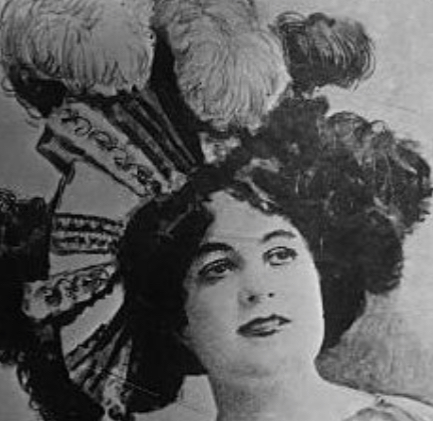
In 1899 Lil married John Nash who became her manager and they later became involved in the case of Dr Crippen and Belle Elmore, an aspiring music hall performer but with little talent. Lil Hawthorne and Belle Elmore were both members of the Music Hall Ladies’ Guild where Belle was treasurer. They became friends and the two couples would visit one another and dine together. The Nashes were visiting America when Crippen’s secretary, Ethel Le Neve, visited Melinda May, secretary of the Ladies Guild and gave her a letter. The letter was written by Dr Crippen saying that Belle had gone to America owing to the illness of some relatives and that a new treasurer should be elected for a few months. Nothing was received from Belle herself.
On their return Lil Hawthorne and her husband were told the story of Belle’s illness and death in America. They were worried by the turn of events and John Nash tried, unsuccessfully, to find out where Belle had died and where she was cremated. By this time Ethel Le Neve had moved into the Crippen’s house and was wearing some of Belle’s jewellery. Others in the music hall world were worried and Vulcana, the strongwoman, had approached the police with her fears. John Nash talked to Crippen and was so disturbed he took a taxi straight to Scotland Yard.
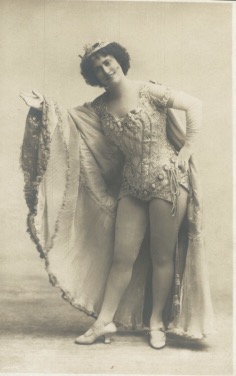
Dr Crippen and Ethel Le Neve were arrested en route to Canada on an ocean liner with Ethel Le Neve dressed as a boy. They were posing as father and son but aroused suspicion and the newly invented telegraph was used to relay the information to Scotland Yard. Human remains were found buried in the basement of 39 Hilldrop Crescent, the Crippen’s home. Crippen was found guilty and given the death sentence while Ethel Le Neve was exonerated. Lil Hawthorne and John Nash gave evidence at the trial in 1910 and in 1911 the Treasury authorised payment to them of £100 to cover expenses incurred and loss of earnings. A few years later they moved to America where Lil Hawthorne died of heart problems in 1926, aged forty-nine.
Thanks to the British Newspaper Archive and the Monomania collection.
 Minnie Cunningham was a music hall singer and dancer, best remembered for featuring in a painting by Walter Sickert. She was born in Birmingham in 1870, the daughter of music hall comic singer Ned Cunningham. He was well-loved and successful, being described by the Birmingham Gazette as the ‘greatest comic singer in the world.’ His daughter started her music hall career after his death when she was ten years old. Minnie Cunningham tells us she began as a male impersonator and sang her father’s songs, although reviews of the time don’t mention male impersonation, only her singing and dancing. She moved from the provincial halls to London where she performed at the principal halls of the day.
 painter Walter Sickert by the poet and music hall critic Arthur Symons. Both men were smitten by the popular artiste and Sickert arranged to paint her portrait. The figure of Minnie Cunningham was painted from life in Sickert’s studio in Chelsea in 1892. For this painting she stood on a raised stand as if she were on stage but when asking her to pose for a later painting Sickert writes that he had built a proper stage ‘six foot square, with steps up to it.’ The background is thought to be the Tivoli on the Strand in London where Sickert had seen her perform. The painting was originally entitled, Miss Minnie Cunningham ‘I’m an old hand at love, though I’m young in years.’ This was one of her popular songs at the time and while singing it she dressed as a young girl which made the performance more daring. The painting became known as Minnie Cunningham at the Old Bedford. It was exhibited for the first time at the New English Art Club in 1892 to a mixed reception, with a reviewer in the Pall Mall Gazette writing ‘The red dress of Minnie Cunningham glows with refined richness in its setting, but the proportions of the figure and the feet and hands seem altogether absurd.’ The subject and setting were just too shocking for many at the time and it was said by some to represent degradation and vulgarity.
 contract in which she was engaged as principal girl in the Jack and Jill pantomime at £30 a week. She refused to wear the costume for her part saying it was too short and offended her standards of decency. Discussions with management were unsuccessful, often ending in tears. Eventually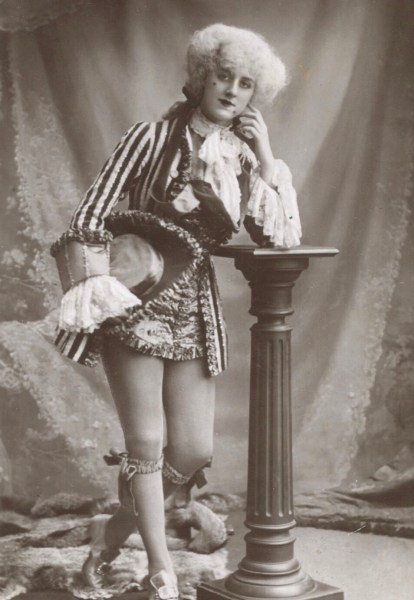
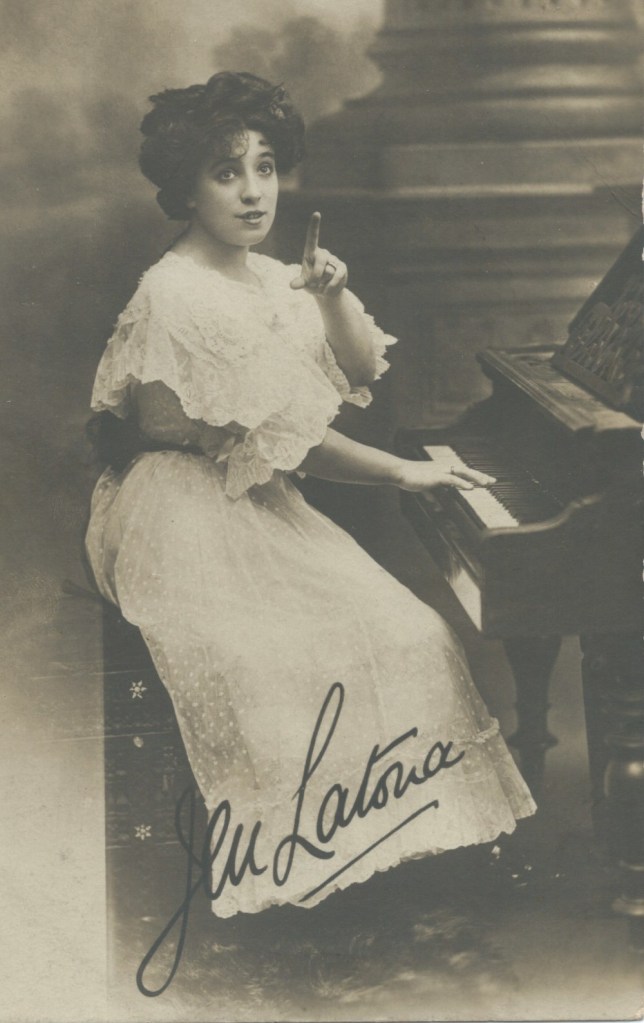



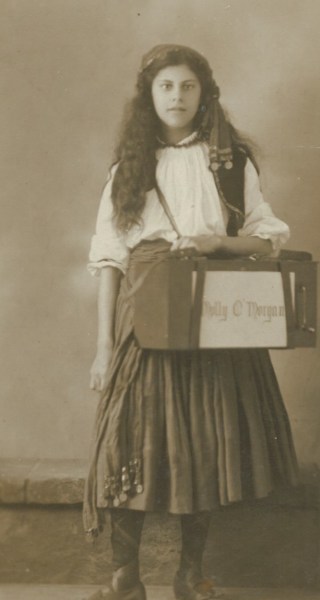 with a barrel organ. The card on the barrel organ reads ‘Molly O’Morgan’. The young woman is staring out from the photograph as if she has a story to tell. There is a story of Molly O’Morgan, the daughter of an Irish mother and an Italian organ-grinder father, who had dark brown hair and laughing eyes. It is said her mother died when Molly was young and she and her father left Ireland with a barrel organ and monkey to take their chances in Europe. Molly would dance while her father played the barrel organ and the crowds were charmed into parting with their coins. They travelled from city to city and eventually arrived in Monte Carlo where Molly’s fortunes changed. She was noticed by Duke Medici-Sinelli, an elderly widower, who naturally enough was also rich and charming. The Duke arranged for Molly to appear at a theatre and in the way of fairy tales she immediately became a star. Molly and the Duke married and unkind rumours suggested she was a gold-digger although the couple seemed devoted to each other. When the Duke died Molly did not marry again but came to Monte Carlo every year and stayed in the same suite in which she and the Duke had spent their honeymoon. She was said to live in Hungary with a distant branch of the Duke’s family.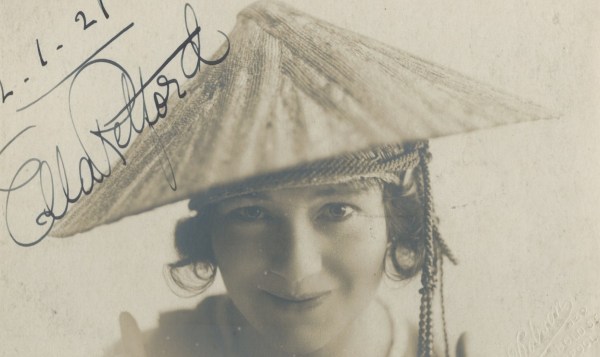


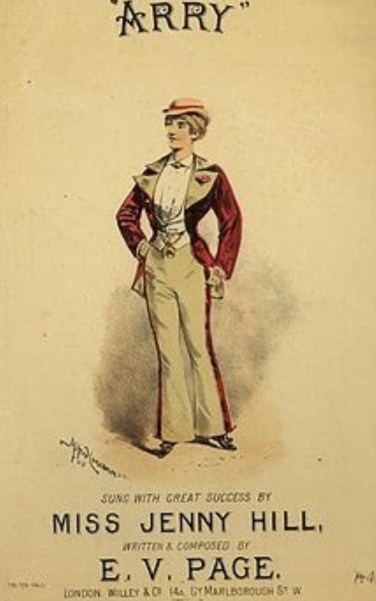

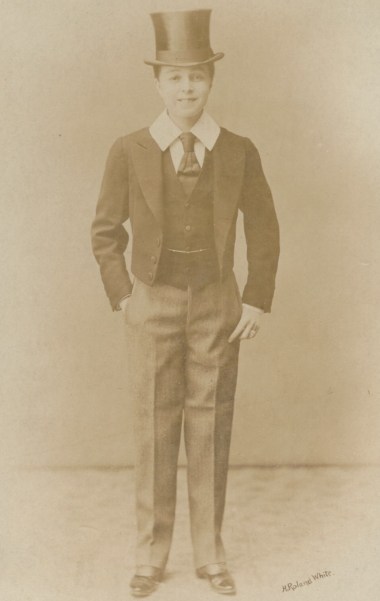
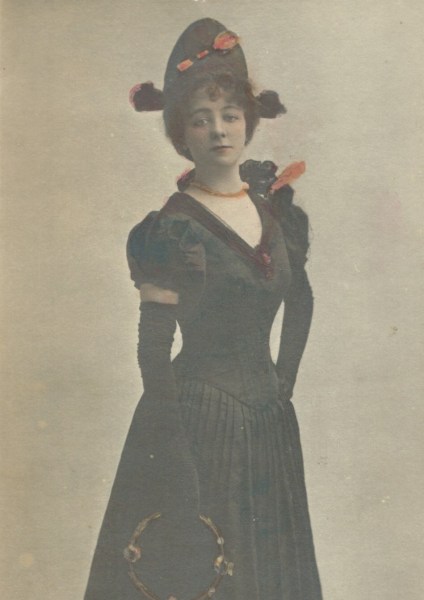
 Daisy Jerome was born in the States in 1888 but moved to England as a child when her father suffered a financial crisis. Money was needed and she followed her sister on to the stage. She was a small, dainty figure with bright red hair, compelling eyes and an expressive face. Her appearance belied her risqué performances and her hoarse, sensual voice. She was a toe-dancer and a wooden shoe dancer, but best known as a mimic and comic singer. Daisy married Frederick Fowler in 1906 but they lived together for less than a year with Fowler blaming the marriage breakdown on the constant presence of his mother-in-law. He filed for divorce on the grounds of Daisy’s misconduct. She was living with Mr Cecil Allen in Battersea by this time and claimed Allen would marry her if she was divorced. The decree nisi was granted with Fowler saying he would shoot Allen if he didn’t marry Daisy. She left for a three year tour of Australia shortly after accompanied only by her mother. She adopted the name ‘the electric spark‘ and seems to have lived up to this in her public and private life.



 Into the Limelight