Star Trap

Star Trap from the  Drury Lane Theatre.

Star Trap from the Drury Lane Theatre.

A recent visit to the theatre section of the Victoria and Albert Museum led me to the Star Trap from the Drury Lane Theatre in London. This enabled performers to shoot up on to the stage at great speed and was especially popular in pantomime, allowing an element of surprise and excitement. The performer stood on a platform below the trap which was held steady by stage-hands, a board was removed from below the trap and then a counterweight, previously winched up and held steady by as many as six stage-hands, was allowed to drop so propelling the lucky artiste through the trap. The performers needed to make sure they cleared the trap as the wooden pieces fell back level with the rest of the stage. A board would be quickly placed under the trap to make a solid floor again. As you can imagine, the possibilities for accidents were numerous. The platform was not always held steady which meant the performer would hit the wooden sides of the trap before appearing, the board under the trap wasn’t removed or put back or the performer didn’t clear the trap. Despite this, the traps were in use in some theatres until the middle of the twentieth century before being banned by the actors’ union, Equity. The trap in the picture was in use between 1800 and 1900. Could the performers wear hats or headdresses and did they they put their arms over their heads for safety as they hurtled through the air. Did anyone shoot out of the trap too soon? Below is a modern example of a star trap including a slow motion demonstration.

http://m.youtube.com/watch?v=17bR-8HVMMA

The stage-hands communicated by whistling and that’s why it’s considered bad luck to whistle backstage. An ill-judged whistle could cause a nasty accident. Did the theatre management allow the stars of their pantos to risk the Star Trap or was it for those further down the bill?

In November 1873 the stage paper, The Era, comments on a new ballet at the East London Theatre of Varieties which had some good trap feats. ‘The applause which greeted the artistes as they suddenly made their disappearance and reappearance through the star trap, the vampire trap, and other novel appliances, was deafening.’

Newspaper report from the British Newspaper Archive britishnewspaperarchive.co.uk

Let’s get physical

A character in Virginia Woolf’s Night and Day remarks on the music hall as a place where ‘polar bears follow directly upon ladies in full evening dress, and the stage is alternately a garden of mystery, a milliner’s band-box, and a fried-fish shop in in the Mile End Road.’ We can add a boxing ring to this mix and wonder at the female boxers who took part. Step forward French fighter Marthe Carpentier, billed as the Champion of the World.

Marthe Carpentier Champion of the World

Marthe Carpentier
Champion of the World

In March 1914 Marthe knocked out an English opponent, Lucie Warner, during a bout in France and threw out a challenge to any woman of her weight to fight her for the Championship of France. The snag was that she wouldn’t disclose her weight and claimed the right to weigh what she liked when she entered the ring. She said that would-be opponents were welcome to look her over to decide if they were in the running. I can’t find evidence of anyone looking her up and down or taking up the challenge.

In July of the same year Marthe and Lucie are billed as appearing together at the Newcastle Hippodrome among a group of women boxers from France, England and Norway including Vera Caine who gave a ball-punching exhibition. Again Marthe issued a challenge to any ‘lady‘ of her own weight which was this time said to be around eight stone. Women putting on boxing gloves met with disapproval in some quarters and the Newcastle Daily Journal in July 1914 has a quote from The Times  probably referring to the suffragettes, ‘Are not our most sacred and ancient buildings almost daily desecrated or burnt to the ground by women? Why, then, so much squeamishness about a little blood at a boxing match?‘ – written by a ‘Mere Man.’

Maggie Clifton

Maggie Clifton-wonder of wonders

Gymnastic and balancing acts received a mixed reception but were advertised with a use of superlatives to create wonder and awe in anticipation of the performance. The audience were treated to daring, extraordinary, sensational and Herculean feats although the stage paper, The Era, suggested that there was a danger of this kind of performance being overdone. Performers who enthralled their audiences with balancing acts were known as equilibrists which conjures up someone a little out of this world. I’ve found references to grotesque gymnasts, along with comic and aerial but the most intriguing of all is the phantom gymnast, La Belle Gertella. Any information on her or her act would be gratefully received.

The 5 Original Cliftons advertised as ‘Belgium’s greatest gymnastic, equilibrist wonders,’ featured Maggie Clifton who performed head and hand balancing feats. She is described as the ‘wonder of wonders‘ and is the only individual in the group to get a mention. An acerbic comment in the Leeds Times remarks that some of their acrobatic endeavours have the ‘recommendation of being novel, which cannot generally be said of gymnastic feats.’ This might explain the move towards the comic and the grotesque with which some artistes tried to make their mark. Maggie seems to have worked with the troupe for a few years and is then billed around 1915 as appearing with a male partner. A review describes her as ‘incomparable‘ and giving a performance of more than average excellence. We do not find out the name of her partner. In the late nineteenth century a Harvard Professor warned that those who had been most successful in heavy gymnastics were also subject to nervous complaints. Falling and being dropped by fellow gymnasts might have had something to with that.

Bessie Bonehill

Bessie Bonehill

Bessie Bonehill

Bessie Bonehill was born into a poor family in 1855 in West Bromwich and was originally part of a clog dancing act called The Three Sisters Bonehill. It is said she first started dressing as a young boy in 1862 which would back up her claim to be the first male impersonator in the music hall. She was a highly paid principal boy in pantomime and became famous on the halls for singing patriotic songs including one entitled ‘Here stands a Post’ in which Bessie was dressed as a young soldier. The song became an instant hit. It was originally sung by Miss Rosa Garibaldi who was the niece of General Garibaldi. Rosa was engaged at the Royal Music Hall, Holborn in March 1878 at a sum of £3 weekly but her voice didn’t go down well with the crowd and she wasn’t asked back for a second week. Bessie adopted the song and had the success denied to Rosa with horse-drawn London buses carrying posters advertising the tremendous success of Bessie Bonehill.

Her success continued and she travelled to America to appear at Tony Pastor’s theatre in New York. Apparently she received at least a dozen proposals of marriage a week and was so popular she was re-engaged with an enormous salary increase. However, the Daughters of the American Revolution were not impressed by a woman dressing as a man and tried to have her thrown out of America. In one of her scrapbooks Bessie kept an anonymous note she had received. It quoted this passage from the scriptures; ‘The woman shall not wear that which pertaineth unto a man, for all that do so are an abomination’. It claimed to have been sent ‘in love’. Bessie cut her hair short for her impersonation roles, unlike many male impersonators who wore wigs, which probably helped to fan the flames of righteous indignation.

Bessie Bonehill with her short hair.

Bessie Bonehill with her short hair.

At one point at Tony Pastor’s theatre Bessie Bonehill and Millie Hylton, another male impersonator from the West Midlands, carried out three hundred and sixty consecutive sell-out performances over five weeks with Bessie earning $450 a week. She was an astute business woman and invested in a farm on Long Island which had a fruit farm, granary, dairy and cheese factory.

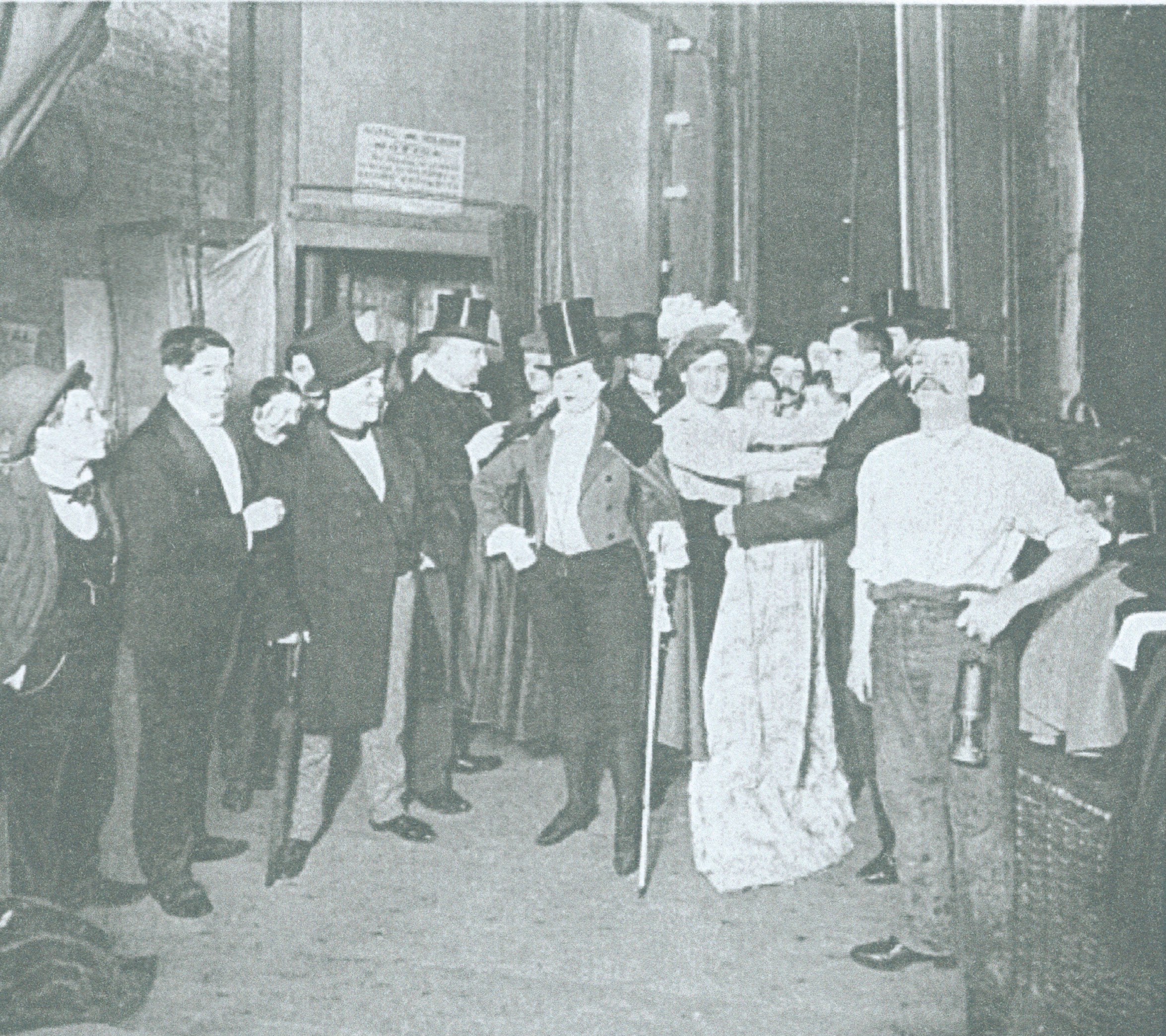
Bessie Bonehill and Millie Hylton were linked in another, less pleasant way. Performers were open to blackmail in those days, with gangs threatening to disrupt their performances if a payment wasn’t forthcoming. Bessie was playing in the pantomime Aladdin in Sheffield when she was followed home by a group of people of the ‘coster type’ who asked for money for the applause they had given her during the evening. They claimed to have been paid by other performers in the past. She refused and on the Saturday evening there was a loud hissing as she began a song. Bessie told the audience what had happened and the would-be blackmailers were removed from the theatre to loud applause. She was accompanied home by a constable every evening in case she was attacked for her bravery. Millie Hylton was not so lucky as she and her brother were attacked on their way home from her performance in a pantomime in Birmingham. The New Zealand Herald tells us they were set upon by two ‘roughs’ and five women. According to the newspaper account her brother was beaten unconscious and the women dragged Millie to the ground, kicked her and made as if to strangle her. She had refused to succumb to the blackmail of paying for applause and the police thought this attack was the would-be blackmailers’ revenge. There is a wonderful photo of Millie Hylton and others waiting for their turn at the Royal Music Hall, Holborn. She is in the middle with a white stick. Performers didn’t always get dressing-rooms to wait in and conditions were crowded and rudimentary, particularly for those lower down the bill.

Waiting to go on at the Royal Music Hall

Waiting to go on at the Royal Music Hall

This post is a tribute to Richard Bonehill who died in February 2015. We never met but swapped notes about Bessie. Richard published a book called ‘England’s Gem’ – the story of Bessie Bonehill.

Who’s a pretty boy?

Emma Don 1873-1951

Emma Don 1873-1951

Male impersonators are a fascinating part of music hall history and I have a lot of postcards of these artistes. This post is mainly pictorial and then in the next post I’ll choose one performer to talk about in more detail. I can’t resist showing the not so good along with the sublime and I’ll leave you to decide which is which.

Gertie Lewis Photo around 1908.

Gertie Lewis
Photo around 1908.

Hettie (Hetty) King 1883-1972

Hettie (Hetty) King
1883-1972

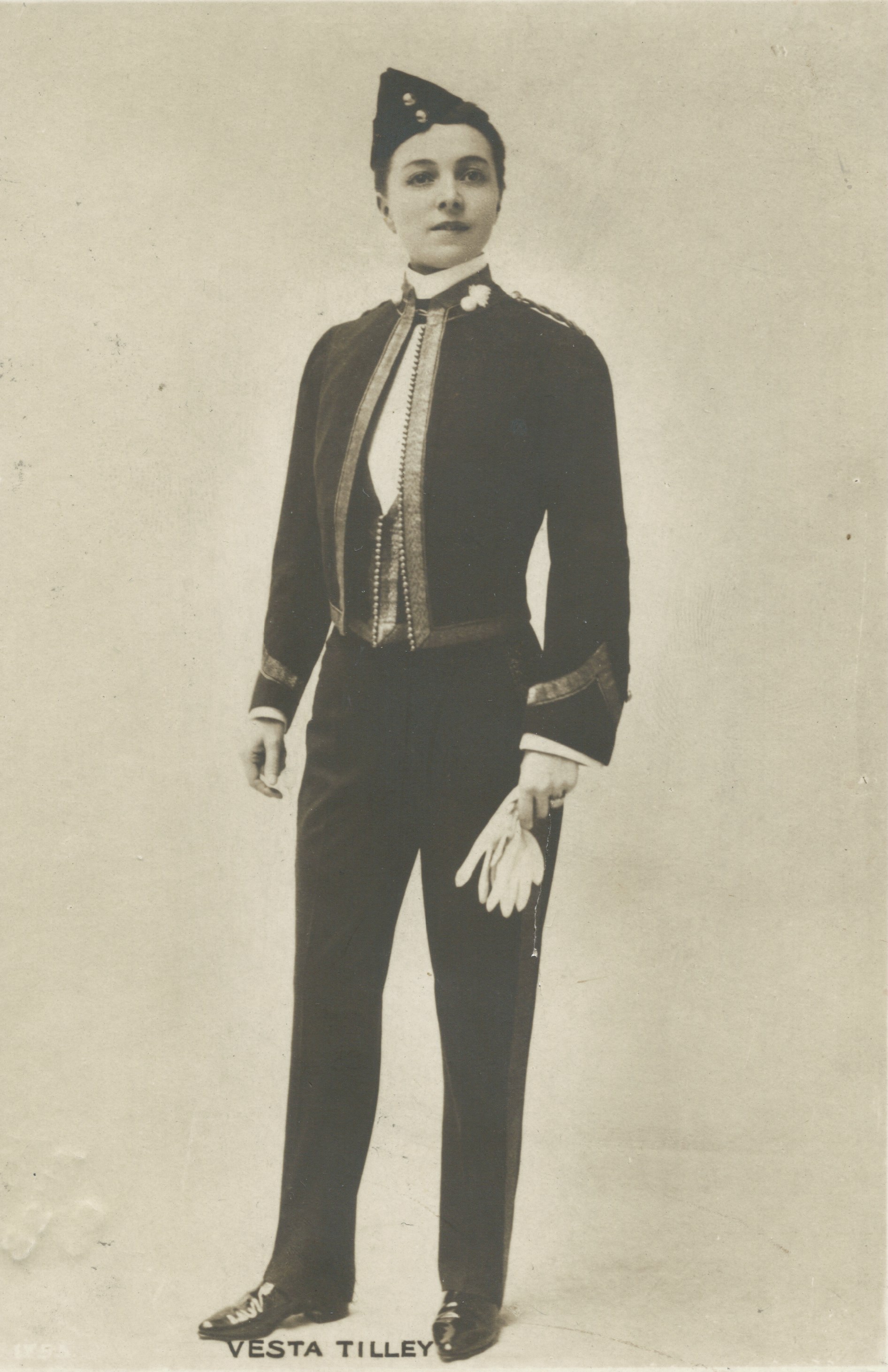
Vesta Tilley 1864-1952

Vesta Tilley 1864-1952

Deb St Welma  Aka Deb Webb and Teddie Webb. Photo around 1917.

Deb St Welma. Also appeared as Deb Webb and Teddie Webb.    Photo around 1917.

Bessie Bonehill 1855-1902

Bessie Bonehill
1855-1902

Ella Shields 1879-1952

Ella Shields
1879-1952

Flo Dixie  Photo around 1921. Described as the bantam male impersonator.

Flo Dixie
Photo around 1921. Described as the bantam male impersonator.

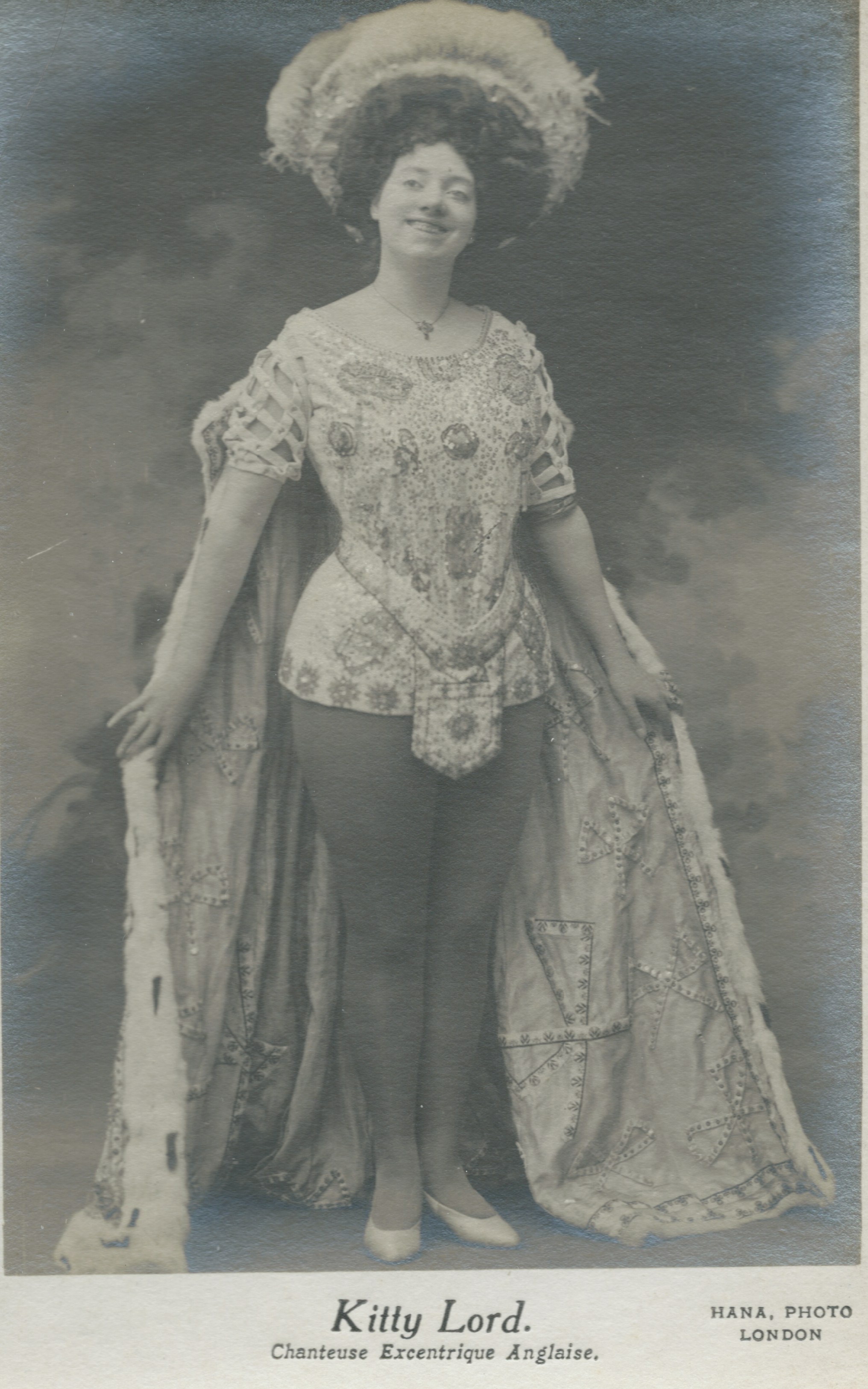
Kitty Lord

Kitty Lord possibly wearing Symmetricals

Kitty Lord possibly wearing Symmetricals

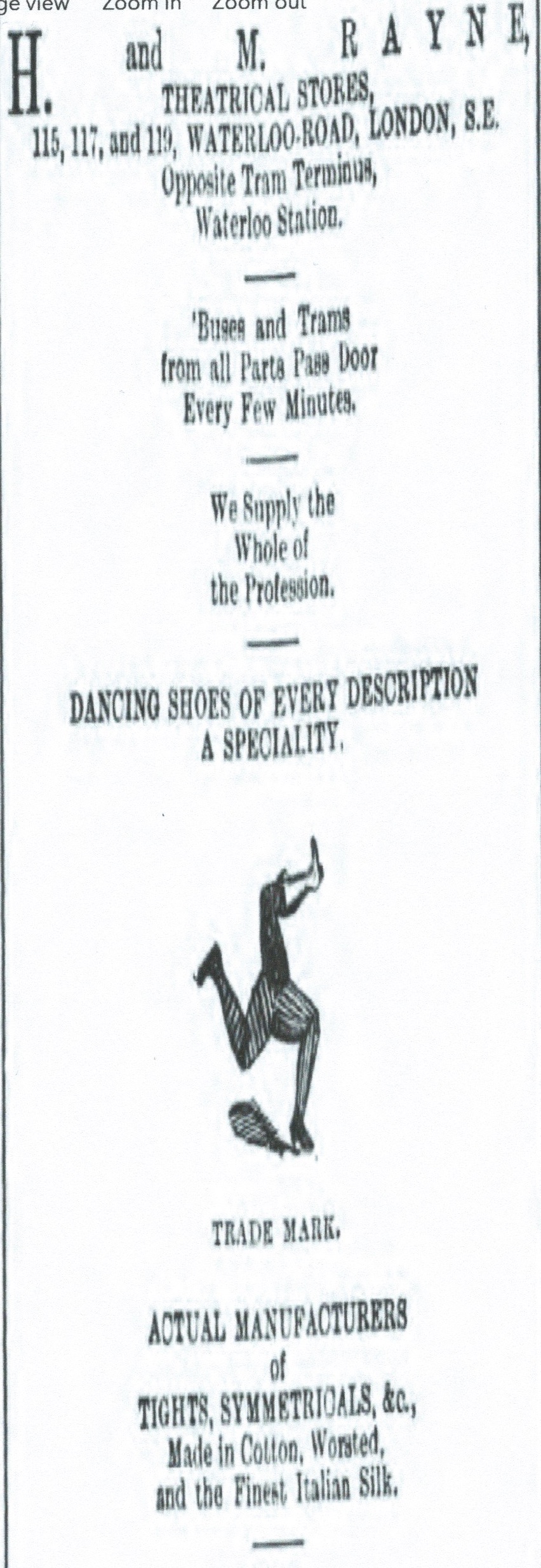
Kitty Lord was originally in service and then took the giant step towards appearing on the music hall and theatrical stage. On her postcard she is described as an eccentric singer. Hour glass figures were popular on the stage at that time and Kitty has curves and a nipped-in waist. Help was available to achieve this result and padding was widely used. Padded tights, known as Symmetricals, could be bought at theatrical suppliers as seen in the advert.

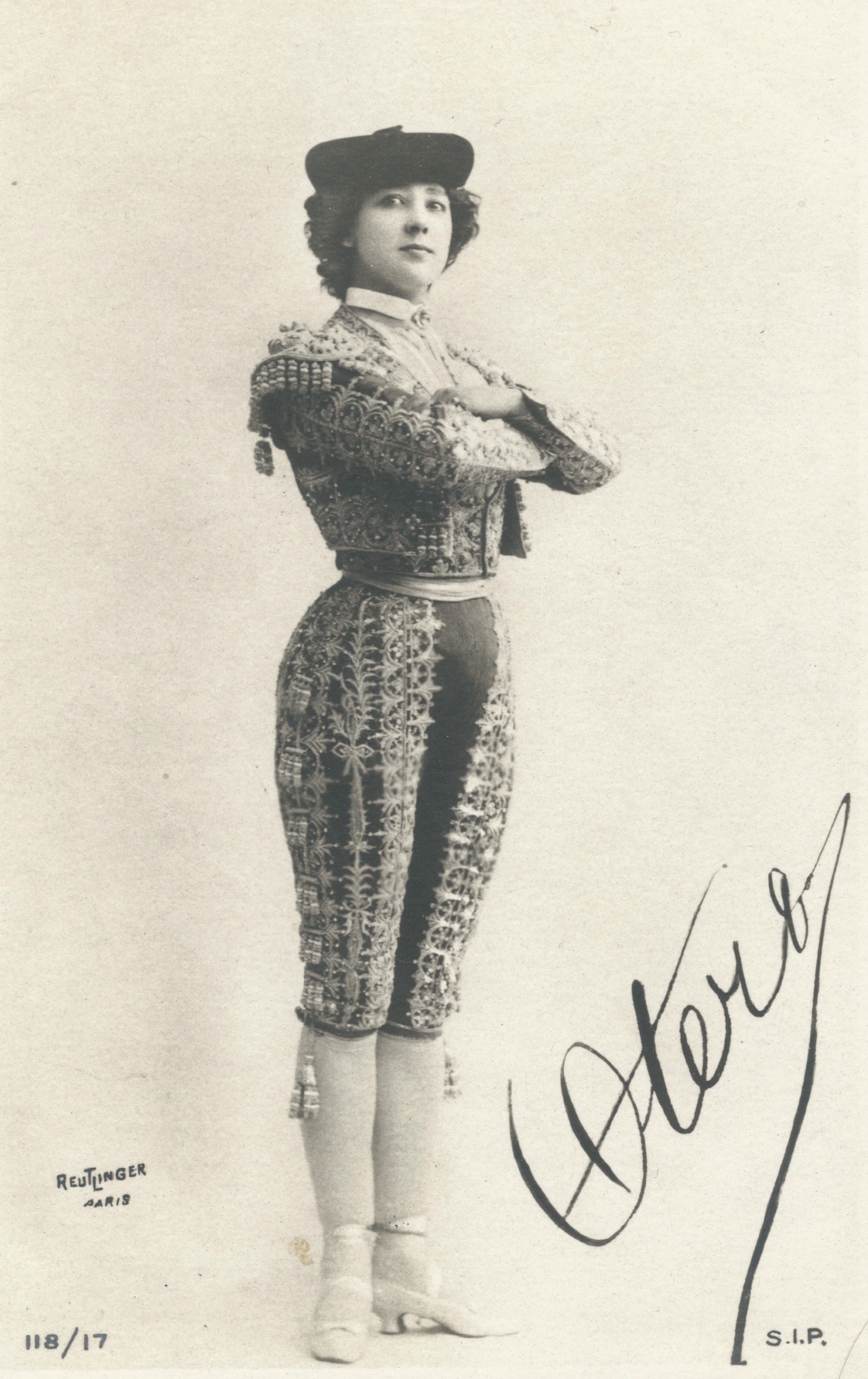
Otero probably wearing Symmetricals.

Otero probably wearing Symmetricals.

Advert for Rayne's theatrical suppliers

Advert for Rayne’s theatrical suppliers

In November 1904 Kitty Lord, described as an actress, was fined £7 for furiously driving a motor car and failing to provide a driver’s licence. A policeman reported she passed him like a flash of lightning. When stopped, she said, as she gave her name, “Don’t make any mistake. I shall be awfully disappointed if I don’t get a summons.” Apparently she had fulfilled an engagement in Blackpool and was on her way back to London. While the owner of the car was having a cigar she took the steering wheel.

Kitty was no stranger to the courts and found herself involved in two cases which revolved around variety theatres in Buenos Aires and Brazil. Another variety performer, Mamie Stuart, took action which resulted in two court cases over an engagement in various South American variety theatres including the Casino, Buenos Aires. It was suggested unscrupulous agents inveigled female artistes into disorderly houses and that they were then ‘ruined forever both morally and socially.’ Kitty Lord gave evidence as to the character of the house.

Four years later Kitty and her husband were sued as Mr & Mrs Parker for £49 said to be owed for a passage back to England from Brazil. The theatrical engagement had not gone well and the performers were  expected to pick up money to enable them to live ‘ by any means that came their way.’ The artistes had met Henry Barnes and George Spearman after their first performance and had supper with them. The newspaper reports that Kitty Lord and her companion were in a difficult and dangerous position having run out of funds and with an angry theatrical management on their tail. Barnes and Spearman claimed to have settled their bills and paid their passages to England but once home Kitty and her husband refused to pay. Kitty denied any money was given to her and said that she went to Para, in Brazil, against her husband’s wishes. She said Para was a dangerous place for some people, but not for her, and that she had been to many strange places all over the world but always got out of them. The judge found against Kitty but held that her husband was not liable as she had gone against his authority.

Newspaper reports from the British Newspaper Archive britishnewspaperarchive.co.uk

Belle Elmore

Belle Elmore (born Kunigunde Mackamotzki, known as Cora) was a not very good music hall performer who came to London from America with her husband, Hawley Harvey Crippen. She was a sometime male impersonator and a would-be opera singer. During a strike of music hall artists she arrived to perform at the theatre, crossing the picket line. Marie Lloyd who was supporting the strike is reputed to have told the other pickets to let Belle Elmore through as she would empty the theatre anyway. She was the Honorary Treasurer of the Music Hall Ladies’ Guild and her disappearance in 1910 was first noted when she failed to turn up for a meeting. A note was delivered purporting to be from Belle but in Crippen’s handwriting in which she said she had left for America on urgent business concerning property. Suspicions were aroused when she did not contact her friends and seemed to have taken very little with her. Crippen let it be known she had become ill while away and later announced her death.

Belle Elmore

Belle Elmore

Crippen was employed by a medical company in London, having medical qualifications from the States. A typist called Ethel le Neve worked for him. She moved into the house previously shared by Crippen and Belle Elmore and began wearing some of  Belle’s clothes and jewellery. Belle’s friends reported their concerns to the police and Crippen was questioned. He and Ethel le Neve disappeared and it later transpired they had travelled to Belgium and from there had joined the SS Montrose on the way to Canada. They travelled as father and son with Ethel le Neve disguised as a boy. Crippen had previously asked an assistant at work to buy the boys’ clothes. I wondered if Belle’s male impersonation routine had given him this idea. Remains of a body were found in the basement of Crippen’s house and he was eventually arrested, along with Ethel le Neve. The captain of the ship became suspicious and used the newly invented wireless telegraph to alert the police.

Newspaper reports during the trial suggested that Belle Elmore had been sighted in the United States and Canada and that she had run away to join a man with whom she had possibly had an affair. These were proved to be unfounded. Doubts have recently been cast on Crippen’s conviction since the advent of DNA testing but the question remains of what then happened to Belle Elmore.

Vulcana

Vulcana, the strong woman, was born in Abergavenny in Wales. Her real name was Kate Wiiliams and she gave her birth date as 1883, although this is disputed. She ran away with William Roberts who ran a local gym and who was already married with a child. Kate sometimes used the name Roberts. They toured Britain, Europe and Australia with an act based on shows of strength and featuring the Atlas and Vulcana Group of Society Athletes.

Vulcana

Vulcana

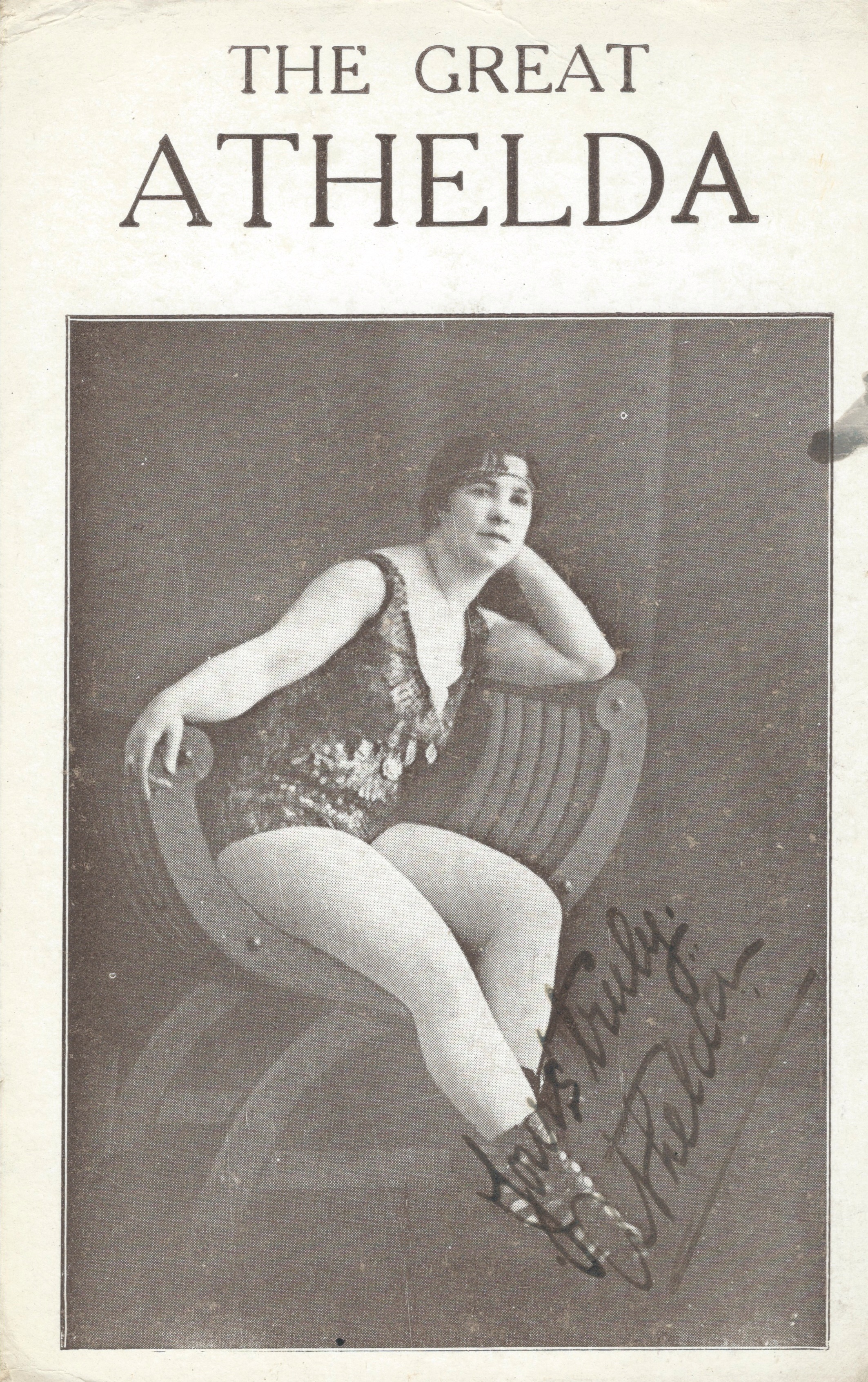
Vulcana was much admired for her strength and often performed without Atlas. Her greatest rival was Athelda and on 29th May 1913 at Haggar’s Theatre in Llanelli a contest resulted in a victory for Vulcana. She was able to lift a challenge bell that Athelda tried unsuccessfully for twenty-five minutes to lift.

Athelda

Athelda

Vulcana won many commendations, awards and medals and used her strength off stage as well as on. She is credited with stopping a runaway horse in Bristol and saving a child from drowning. In 1901 a wagon was stuck in the mud in Maiden Lane in London and she lifted the back so that the wheel could be freed, while in1902 it was reported that she knocked out a pickpocket who was trying to steal her purse. She risked her life in 1921 when the Garrick Theatre in Edinburgh caught fire one evening when her troupe were due to perform. She saved another act’s horses but her hair caught fire and she received severe burns to her head.

In 1910 Vulcana claimed to be the first person to report to the police the disappearance of a music hall performer called Belle Ellmore. This was the wife of Dr Crippen who was later charged with her murder.

Vulcana and Atlas stayed together and had six children although they often said they were brother and sister. Some of the children worked with them in the troupe. I have a card of Maud Atlas who performed with the troupe and is billed as one of the ‘sisters’ Gwen and Maud.

Maud Atlas

Maud Atlas

The modern day Vulcana Women’s Circus established in Brisbane, Australia, is named after the wonderful Vulcana, strong woman.

More about Florrie

Florrie Forde lived for a time in the music hall community on Shoreham Beach in West Sussex. She opened a dance hall called Flo’s Beach Club which had a dubious reputation among some local residents for scandalous behaviour. She lived in a house called Gull’s Nest and one of her enduring songs is I do like to be beside the seaside. Predictive text turns her name into Florid Forde which seems a little unfair. Here is a link to Florrie singing.

Florrie Forde I do like to be beside the seaside 1909

Spencer Gore painted Florrie Forde at the Old Bedford Music Hall on Camden High Street in London in 1912. She appears to be winking.

A singer at the Old Bedford Spencer Gore 1912

A singer at the Old Bedford
Spencer Gore 1912

Other music hall stars who liked to be beside the seaside were the already mentioned Marie and Cecilia Loftus, living at bungalows Pavlova and Cecilia and Vesta Tilley at The Bungalow. Marie Lloyd was reported to be the first woman to own a car on Shoreham Beach.

More pictures can be found in the publication HollywoodbySea by Edward and Alice Colquhoun.

Florrie Forde

Florrie Forde was an Australian with an attractive personality and a great stage presence. She was very astute in her choice of material and specialised in songs with rousing choruses which audiences joined in with gusto.

Florrie Forde

Florrie Forde

I remember some of the songs from family parties when everyone still sang the choruses and laughed and swayed back and forth in time to the music. My grandmother reminisced how she had found two of her sisters singing and dancing to one of the tunes from a barrel organ outside a pub. She’d dragged them away and they weren’t very happy about it. Down at the Old Bull and Bush,       Oh, oh, Antonio and Hold your hand out, you naughty boy were favourites.

At twenty-one, Florrie Forde was an immediate hit when she came to London. She appeared in three music halls on her first night – the South London Palace, the Pavilion and the Oxford. She went down so well she was offered a three year contract on one of the music hall circuits. During the First World War she sang some of the most popular songs of the day – Pack up your troubles, It’s a long way to Tipperary and Goodbyeee. Music hall stars often played principal boys in pantomime and Florrie Forde was no exception. She continued to perform until 1940 when she suffered a cerebral haemorrhage while entertaining the troops in World War 2.

The poet, Louis MacNeice, wrote of her in his poem Death of an Actress

With an elephantine shimmy and a sugared wink
She threw a trellis of Dorothy Perkins roses
Around an audience come from slum and suburb
And weary of the tealeaves in the sink.

The Bar at the Folies Bergère

An unexpected visit to the Courtauld Gallery on the Strand in London on Saturday meant I could take the opportunity to look at Manet’s painting of The Bar at the Folies Bergère. The Folies Bergère was the first music hall in Paris, seen as decadent and exciting. The woman behind the bar in the painting was a waitress called Suzon and Manet mocked up a bar in his studio for her to stand behind while he painted.

Manet's Bar at the Folies Bergère

Manet’s Bar at the Folies Bergère

Critics argue about whether or not the scene is reflected in a mirror as the barmaid’s reflection is not true. I was intrigued by the legs of a trapeze artist in the top left corner and by the rather sinister looking man on the right. You can almost hear the  noise and excitement of the crowd but the barmaid seems detached and in her own world.

There is a preliminary work using a different model who also worked at the Folies Bergère.

Preliminary work for Bar at the Folies Bergère

Preliminary work for Bar at the Folies Bergère