

We left Revill and Syd at the beginning of the 1930s when money was tight and work was hard to come by. A note to Syd and Ethel, written by Gordon on a memo from Dale Forty Piano Merchants, regretted that business was so bad for the couple. He went on to say that the slump was general and that the workers in his company had their salaries reduced by 10%.
In 1933 Syd received a letter from Bill Hengler, another performer, asking for repayment of a loan. Hengler needed the money for a court case but stressed ‘this request would not be made if circumstances did not demand it.’ Angeline Hengler apologised in a letter the same year that Bill had not yet thanked Syd for the return of the loan but he ‘had to rush off on Monday for panto rehearsals – – a lot of waste of time.’ Galling for Syd and Ethel who were struggling to find work.
Syd wrote material for their act and amongst the papers is a rather bitter, unfinished letter, heavy with sarcasm. Written from ‘The Pier, Southend (11th week)’ to John and Bill, it begins ‘was tickled to death to get your letter from Middlesboro. Dear old Middlesboro. How I envied you and with Corn Dekker too. Dear old Corn. In fact he’s more than a corn. He’s a malicious growth.’ Corn Dekker was part of an acrobatic act with his partner, Elly Pan. The letter goes on ‘and then you motored from Middlesboro to Rhyl. Well that was nice for you.’ Was this a letter written in anger or was it used as part of the act? Corn Dekker and Elly Pan, the Well-Balanced Pair, were bottom of the bill performers but worked venues such as the Chiswick Empire and the Pavilion Liverpool while Revill and Syd were asked by Percy Hall’s Agency to pencil in Scarboro for one night. ‘As it is the off season and no visitors Jack Gillam cannot afford to pay any money.’ There was the chance to set up a seven-day engagement at the same venue, £12 top whack, if they hadn’t played the town for three years. Presumably this relied on them doing the unpaid night to show willing and there was no guarantee they would get the seven nights.

A monologue/song penned by Syd gives us an idea of how performers tried to make it in the business, moving from one type of act to another until they ran out of options. We have a singer, dancer, juggler and pickpocket, among others. In 1934 Revill and Syd’s strap line was a poignant ‘Still Trying’ while in 1936 they were Revill and Syd ‘Who just Fool Around.’ In the next decade Syd performed solo, billed as the ‘Cheery Chatterbox’ and ‘Tall and Talkative.’ He also took on the role of comedian compère at The Vic, Burnley in 1942 and in 1948 was part of a comedy team in Folkestone’s resident company,‘K’Nights of Joy.

In 1950 Syd took over the role of comedian compère at Worthing Pier Pavilion for a new Saturday Evening Party series. The local paper warned of the waning popularity of the parties and noted the tendency in Worthing to persist too long with a type of show because it was originally successful. This could not have raised Syd’s spirits and it’s the last reference to his working life I was able to trace.
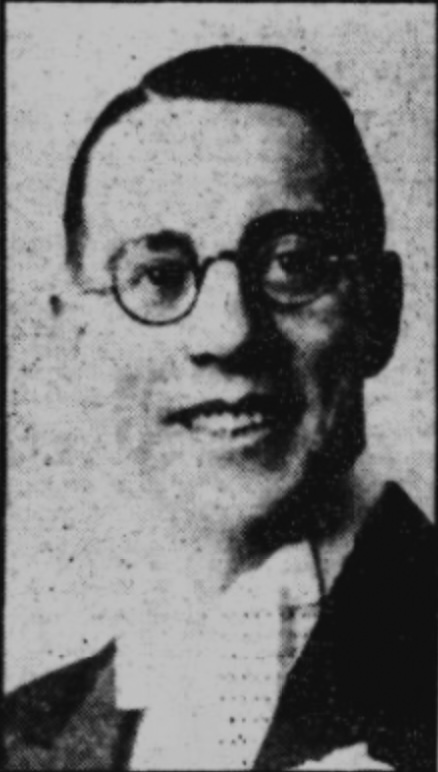
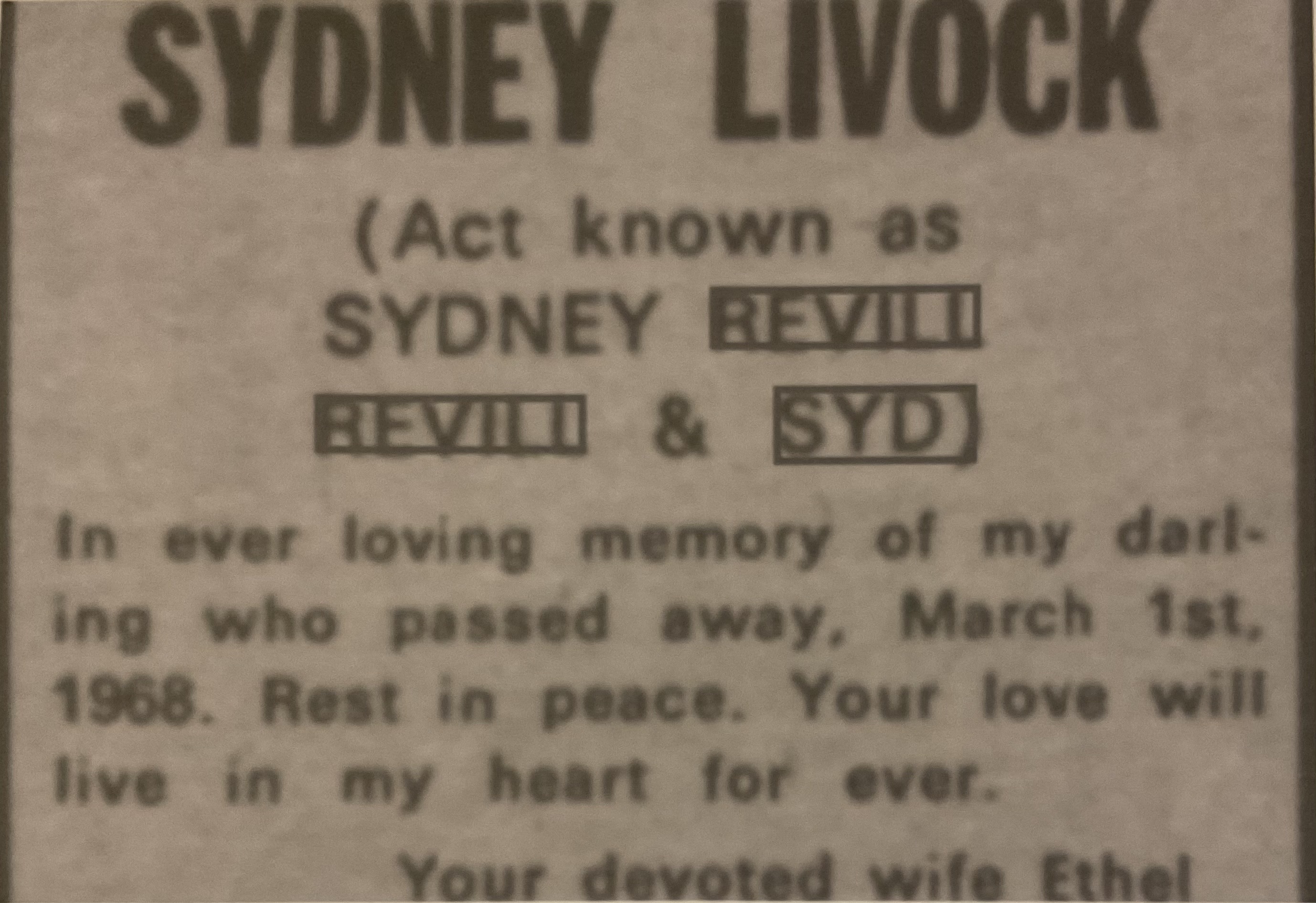
In 1969 his wife, Ethel, placed a notice in the trade paper, The Stage, in his memory. Syd and Ethel left a trace of their lives in the letters, scribbled scripts and contracts which I was lucky enough to find. Syd featured strongly in these but Ethel kept them safe. I wish I knew more about her.
Thanks to the British Newspaper Archive and the Monomania collection.


 Into the Limelight